When First Impressions Last: The Studios That Hit the Jackpot with Their Debut Games
Looking back from the vantage point of 2026, I can't help but marvel at the lightning-in-a-bottle moments in our industry. Sometimes, a studio's first game isn't just a promising start; it's a supernova event that defines them forever. These aren't just good games—they're foundational texts, the equivalent of a novelist's first book becoming an instant classic. The development journey for these titles was like watching a rookie athlete score a championship-winning goal in their professional debut. It's a rare and beautiful alignment of talent, vision, and timing.
🎮 8. Dark Cloud – Level-5
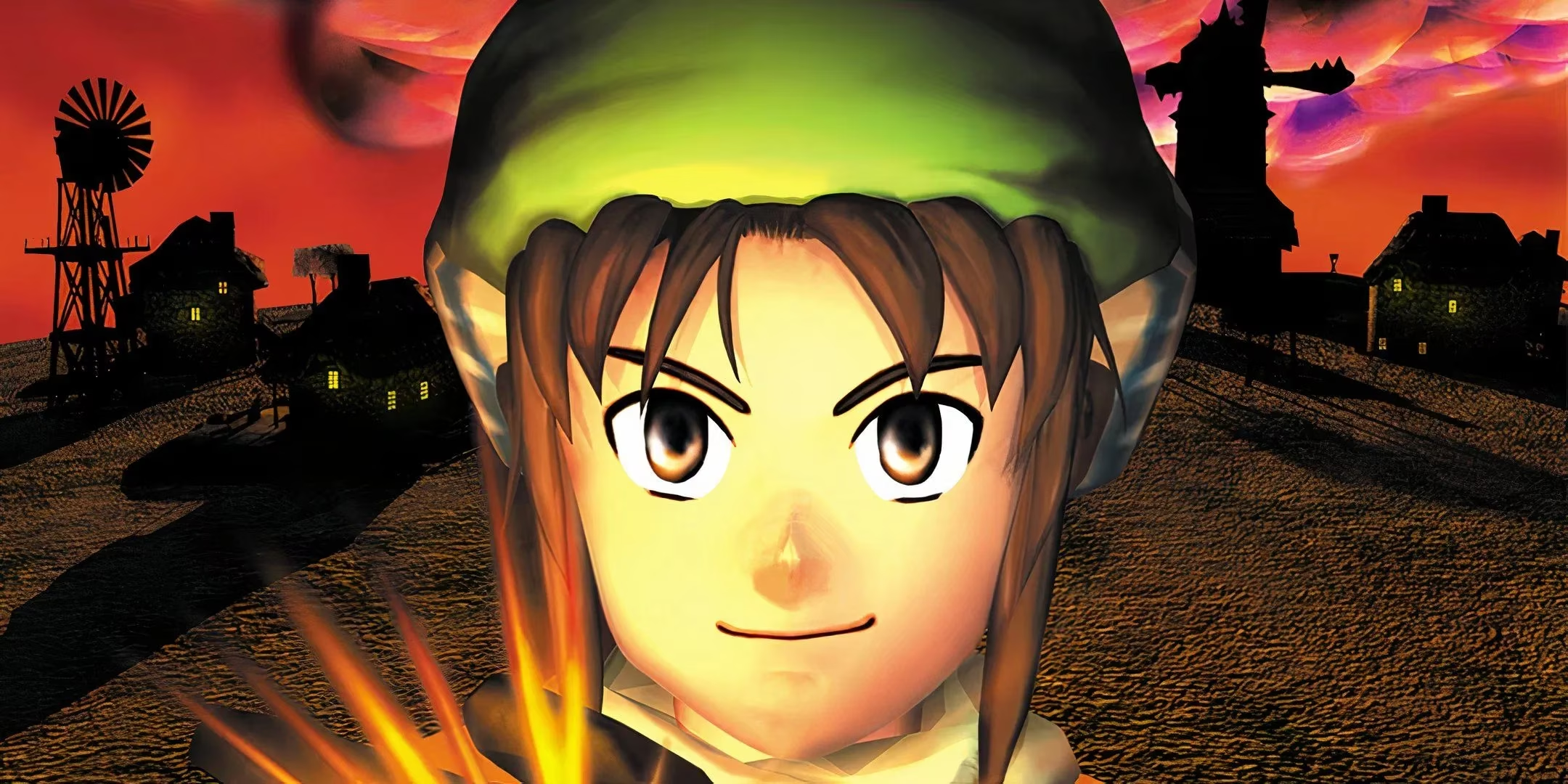
Before the world knew them for the charming puzzles of Professor Layton or the Ghibli-esque wonder of Ni no Kuni, Level-5 emerged from the gate not with a whimper, but with a fully realized vision. Dark Cloud on the PlayStation 2 was an ambitious cocktail of genres that shouldn't have worked for a debutante. It fused dungeon crawling with a deep, satisfying town-building mechanic. Playing it felt like assembling a intricate, beautiful music box where every gear you placed changed the tune. This wasn't just a game; it was a promise. It showcased a studio unafraid of complexity and dripping with a creative polish that would become their signature. For a first outing, it was like a master chef presenting a seven-course tasting menu—audacious, refined, and hinting at even greater feasts to come.
🌑 7. Limbo – Playdead

Some studios spend decades building towards a masterpiece. Playdead arrived with theirs fully formed. Limbo, released in 2010, wasn't just a great indie game; it was a seismic event. Its stark, high-contrast monochrome world was a visual poem of dread and beauty. The gameplay was a series of deliberate, often fatal, puzzles that felt less like challenges and more like rites of passage. For a studio's first project, its confidence was staggering. It had the focused intensity of a perfectly aimed arrow, flying true to its target with no wasted motion. This debut didn't just set a high bar; it was the bar for atmospheric, narrative-driven platformers for years, directly paving the way for their later triumph, Inside.
⚔️ 6. Bastion – Supergiant Games
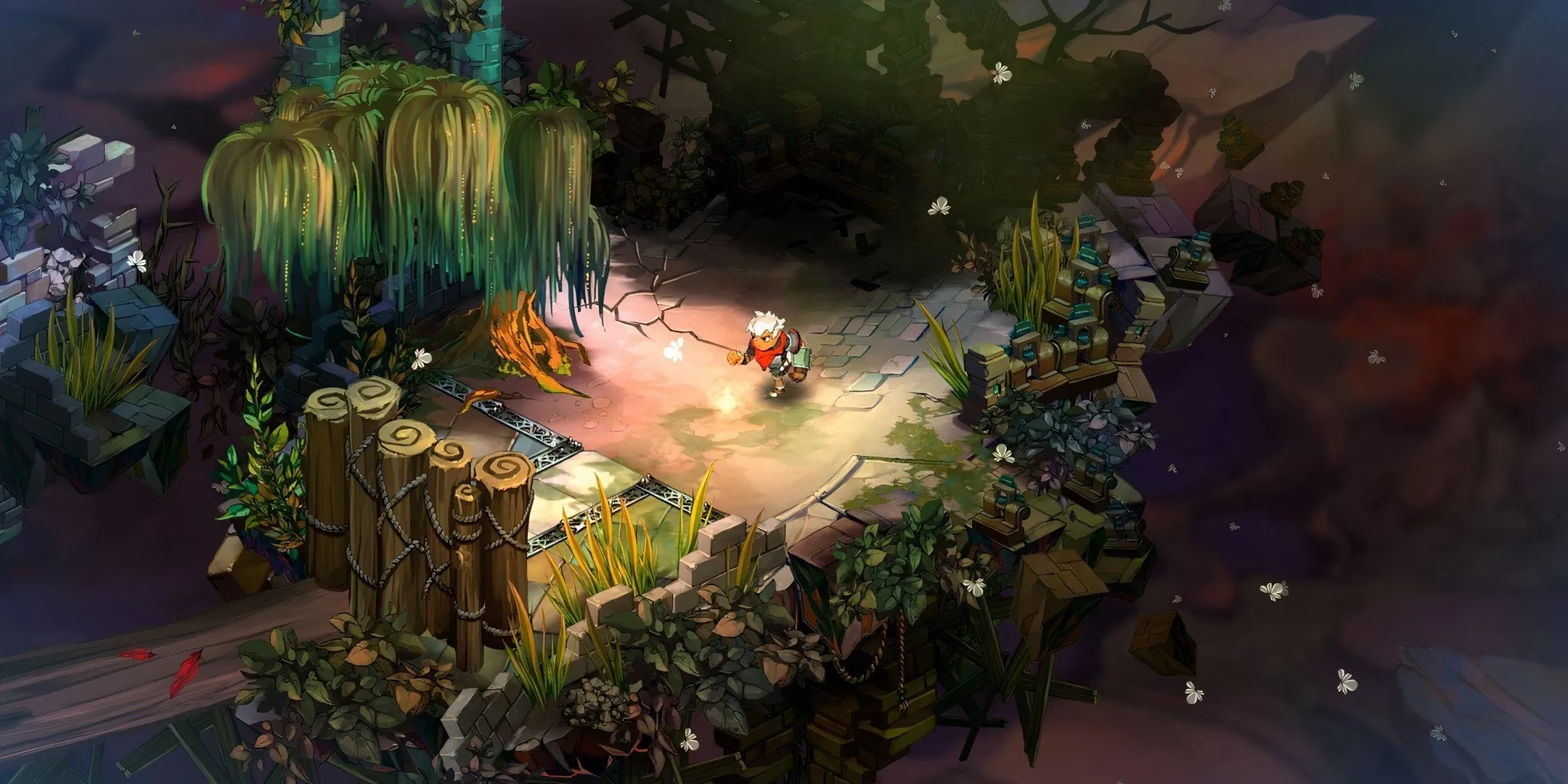
Today, Supergiant is synonymous with critical darlings like Hades and Transistor. But in 2011, they were an unknown quantity. Bastion was their opening statement, and what a statement it was. It introduced the world to their now-trademark lush, painterly art style and phenomenal soundtrack. But its masterstroke was the dynamic narrator, Rucks, whose gravelly voice adapted to your every action, making you feel like the star of your own unfolding legend. This wasn't just a clever gimmick; it was a foundational pillar that showed Supergiant understood game narrative on a molecular level. Their debut had the warmth and immediate appeal of a handcrafted leather-bound book, inviting you into a world that felt both familiar and wondrously new.
💥 5. Gunstar Heroes – Treasure
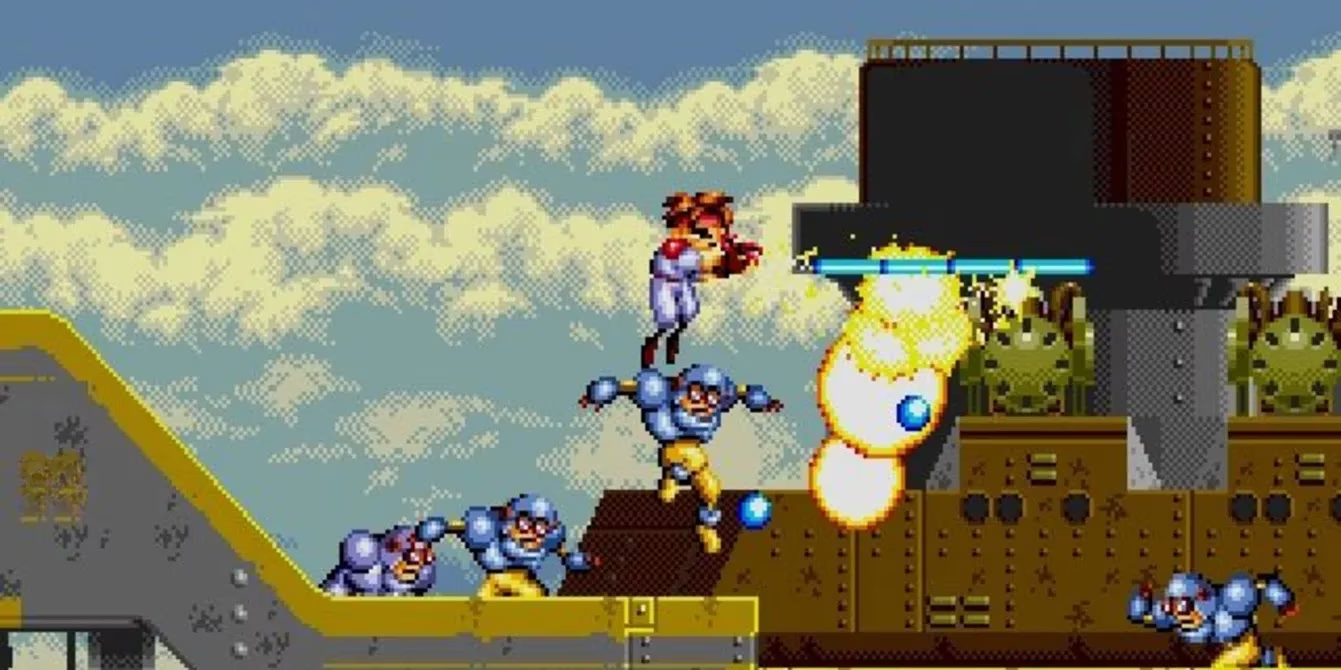
History sometimes hangs by a thread—or in this case, 13 days. Treasure's first released game was Gunstar Heroes, a title that exploded onto the Sega Genesis with the force of a volcanic eruption. To say it set the standard for run-and-gun games is an understatement; it was the standard. Its weapon-combining system, screen-filling bosses, and sheer, unadulterated chaotic joy announced a studio obsessed with gameplay density and player freedom. For a debut, it displayed a veteran's confidence. It was less like a first album and more like a greatest hits compilation from a band that had been rocking for years, all condensed into one perfect, explosive cartridge.
🔴 4. MadWorld – PlatinumGames
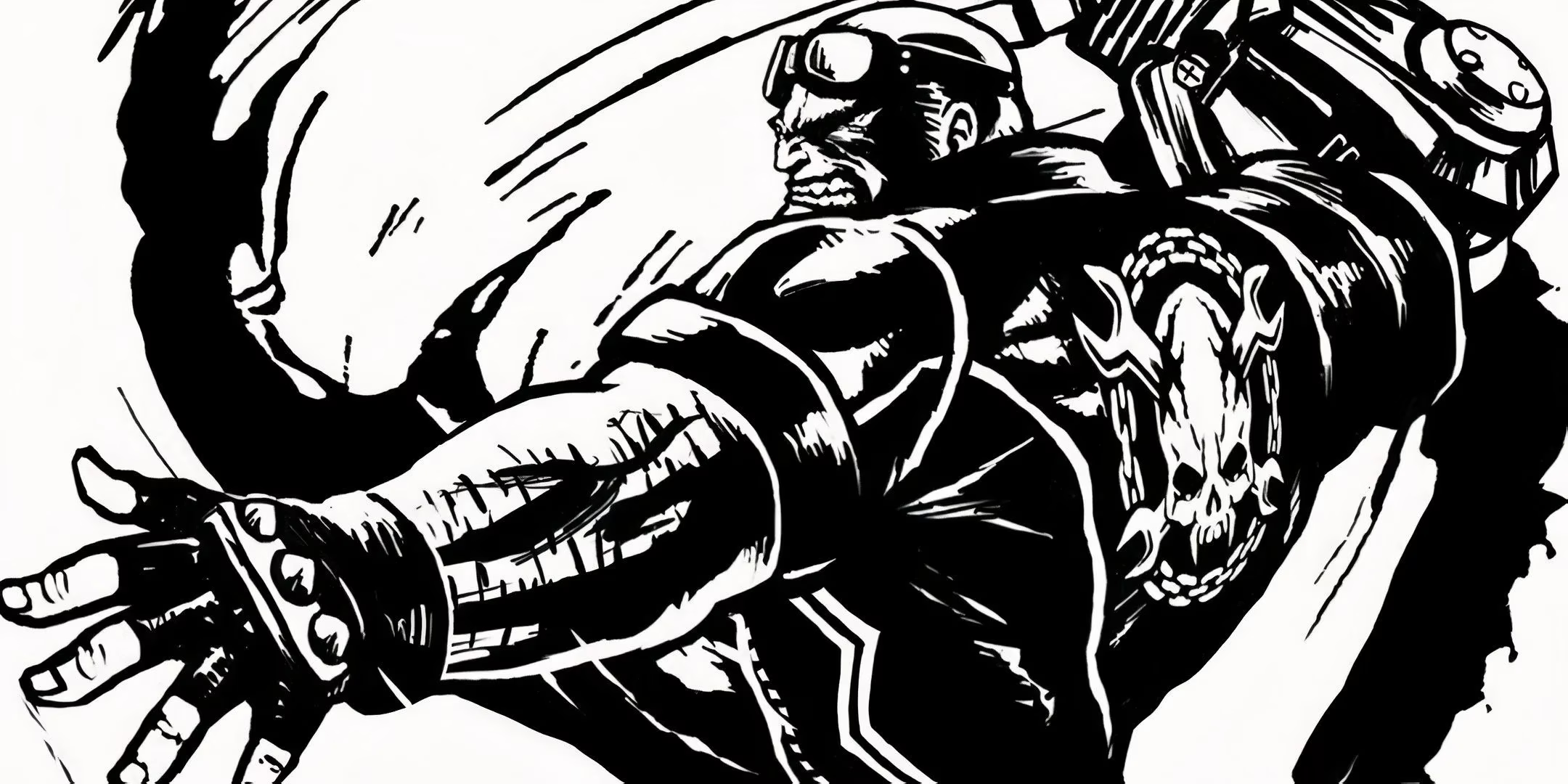
Imagine a heavy metal concert staged in a children's playground. That was the dissonant genius of PlatinumGames' debut, MadWorld, on the family-friendly Wii. In a sea of pastel colors and motion-controlled sports, here was a game drenched in monochrome and splattered with visceral red. It was a statement of intent so bold it bordered on rebellious. The over-the-top, chainsaw-wielding combat was a direct precursor to the stylish action the studio would perfect in titles like Bayonetta and Metal Gear Rising: Revengeance. Their first game was a declaration: we are here to make games that feel intense, immediate, and uncompromising. It was a flare shot into a clear blue sky, impossible to ignore.
🔬 3. Metroid Prime – Retro Studios
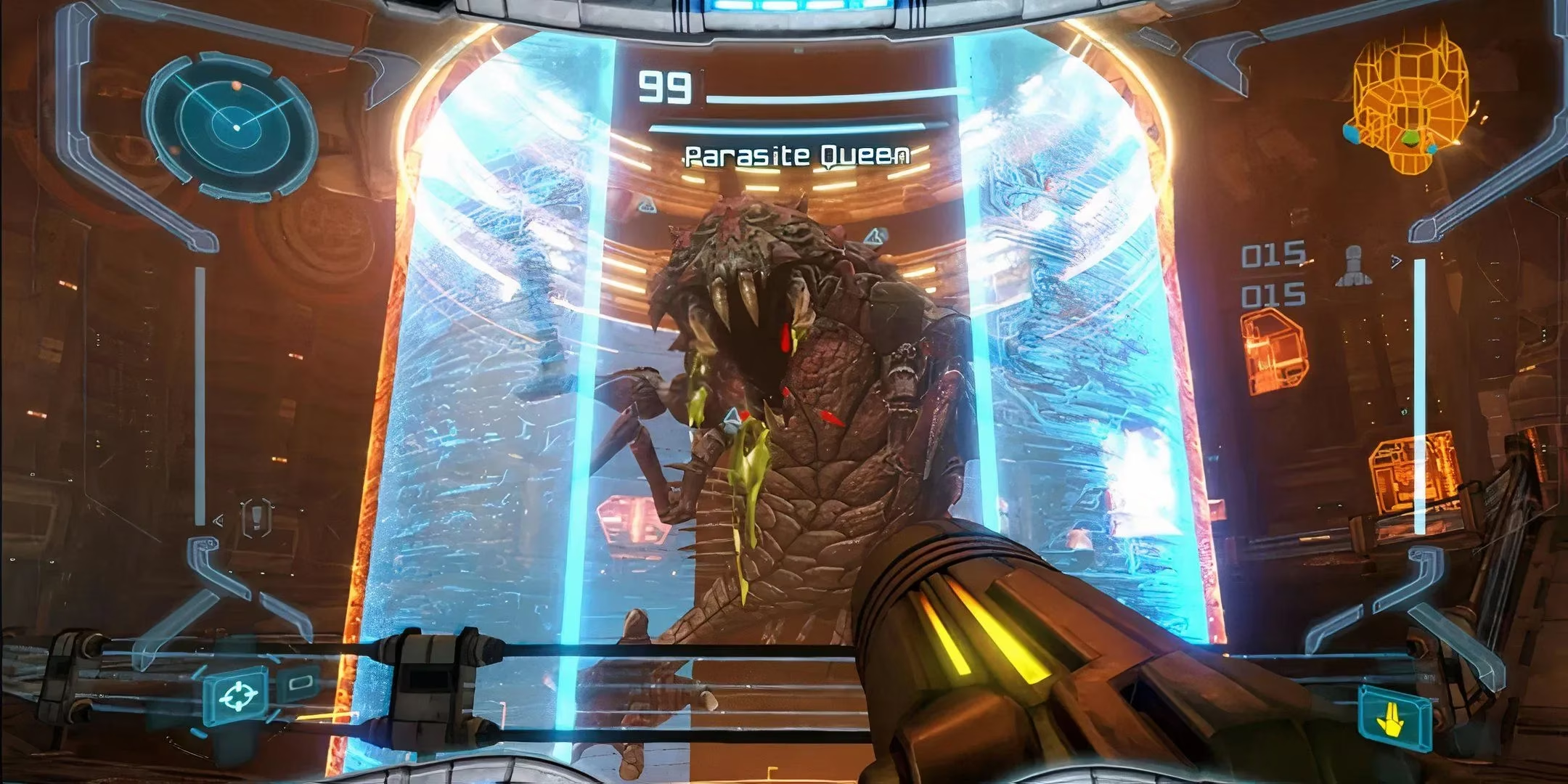
This is the stuff of legend. A relatively unknown studio in Texas handed the keys to one of Nintendo's most beloved franchises? The risk was astronomical. Yet, Retro Studios didn't just make a competent 3D Metroid; they crafted one of the greatest games of all time. Shifting from 2D to a first-person perspective was a gamble that could have shattered the series' soul. Instead, they bottled it. Metroid Prime was hauntingly immersive, a masterpiece of atmospheric exploration and world-building. For a debut, it was like a rookie composer being asked to write a symphony for a full orchestra and delivering Beethoven's Fifth. It wasn't just a good game; it was a paradigm shift that redefined what a franchise reboot could be.
⛏️ 2. Minecraft – Mojang Studios
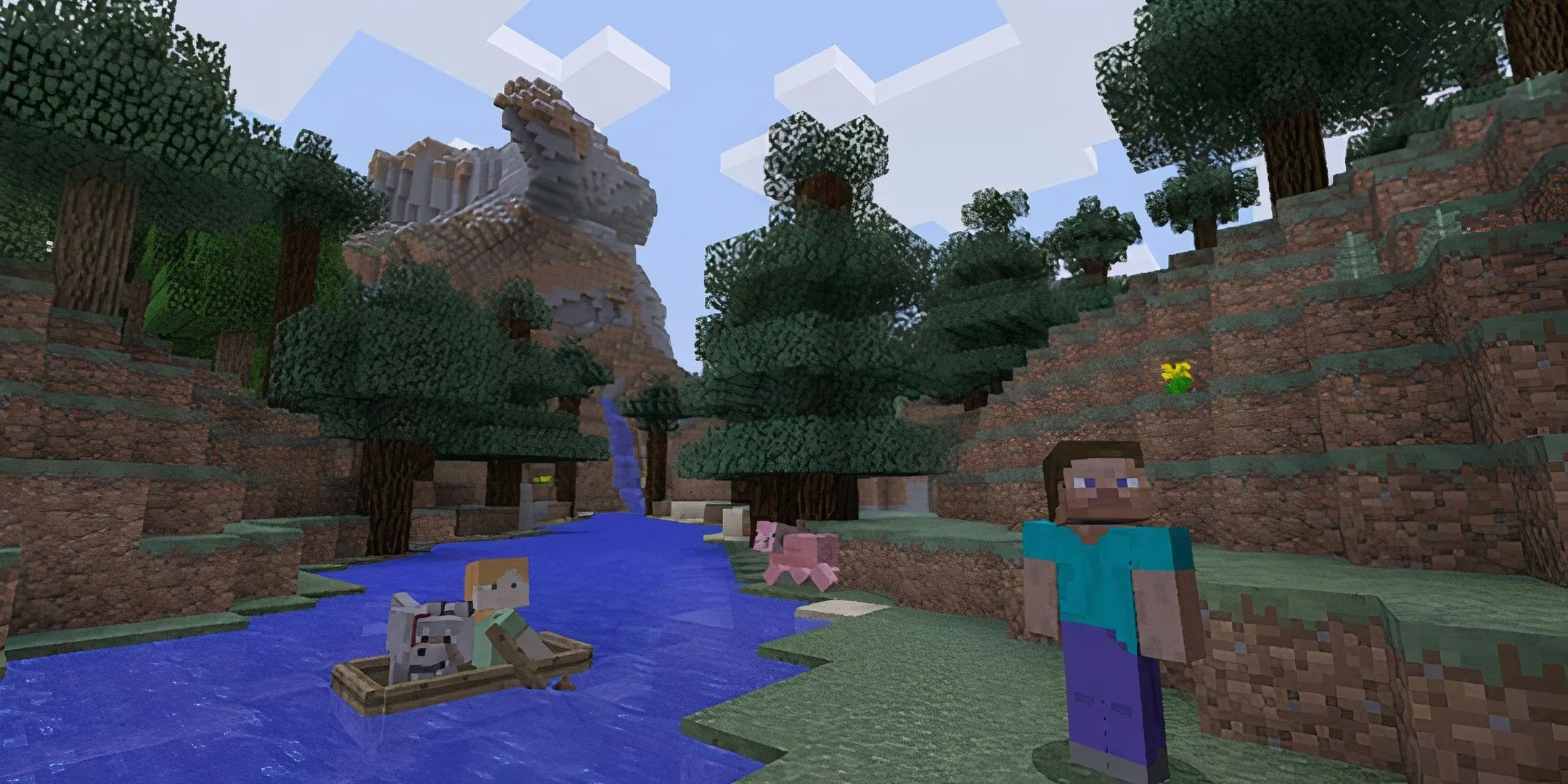
From a small passion project in Sweden to a global cultural phenomenon, Minecraft's journey is the ultimate indie dream. Mojang's debut wasn't just a game; it was a universe of possibility wrapped in a deceptively simple blocky aesthetic. It provided the digital equivalent of a universe's worth of LEGO bricks and said, "Go build your own world." Its success was organic, viral, and unprecedented. As of 2026, its influence is immeasurable, having spawned endless imitators, defined the "survival crafting" genre, and become a staple of digital creativity. Mojang didn't just hit a home run with their first at-bat; they built the entire stadium, sold out the seats, and inspired a generation to start building their own fields.
🧪 1. Half-Life – Valve
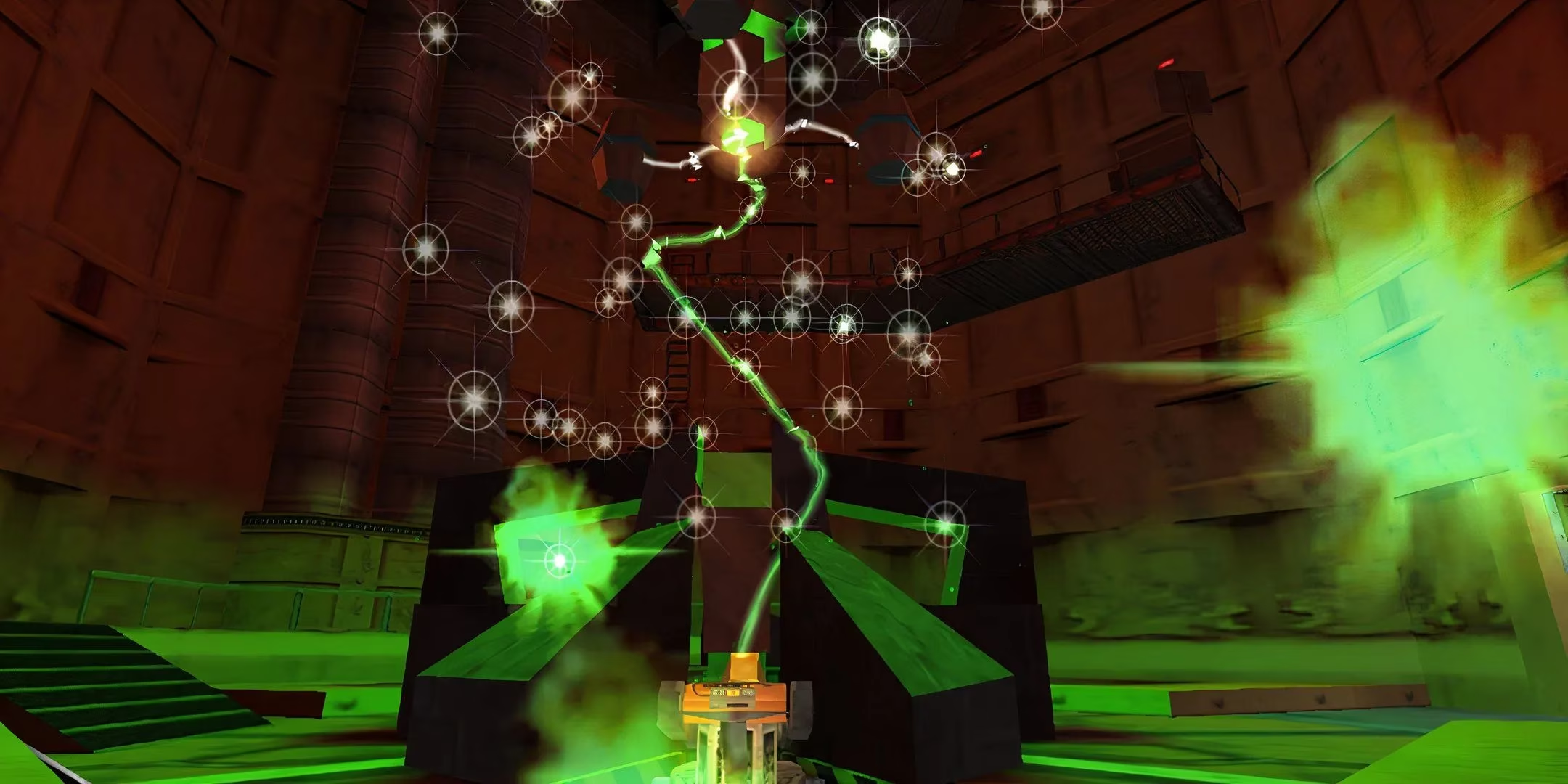
And then there's Valve. The story is now folklore: ex-Microsoft employees want to make a shooter. But Half-Life was never just a shooter. It was a revolution in narrative delivery, seamlessly weaving its story into the gameplay without cutscenes, making the player an active participant in a disaster unfolding in real-time. The atmosphere of Black Mesa was thick with unease and wonder. For a debut title to so fundamentally reshape storytelling in first-person games is almost incomprehensible. It was the Big Bang for a studio that would go on to define digital distribution and create other landmarks. Half-Life wasn't just a great first game; it was a foundational pillar of modern PC gaming, a perfect storm of ideas executed with flawless precision. It proved that from the very beginning, Valve wasn't just playing the game—they were rewriting the rules.
🏆 The Legacy of a Perfect Start
Looking at this list from 2026, a clear pattern emerges. These studios didn't just get lucky. Their debut games shared key traits:
| Trait | Manifestation in Debut Games |
|---|---|
| Confident Vision | A clear, uncompromising artistic or gameplay direction (Limbo, MadWorld). |
| Genre Innovation | Willingness to blend or bend established formulas (Dark Cloud, Metroid Prime). |
| Technical Polish | A level of finish that belied their "first-timer" status (Half-Life, Bastion). |
| Lasting Influence | Creating blueprints that others would follow for years (Minecraft, Gunstar Heroes). |
These games were like perfectly cast seeds. They contained the complete DNA of the studios that made them—their ambitions, their aesthetics, their core philosophies. For us players, experiencing these debuts was like witnessing the first brushstroke on a canvas that would become a masterpiece. They remind us that in gaming, as in art, a powerful first impression isn't just a good start; it can be the start of everything.
Comments Area