Transforming Your Minecraft World: A Personal Guide to Vibrant Landscaping in 2026
For me, Minecraft has always been about the details. You can have the grandest castle or the most intricate redstone contraption, but if the world around it feels flat and lifeless, the whole experience falls short. Over the years, I've learned that landscaping isn't just an afterthought—it's the soul of a build. It's what turns a collection of blocks into a place that feels alive, a world you genuinely want to inhabit and explore. The journey from a barren plot to a thriving, personal paradise is one of the most rewarding aspects of the game, and it's easier to achieve than you might think.
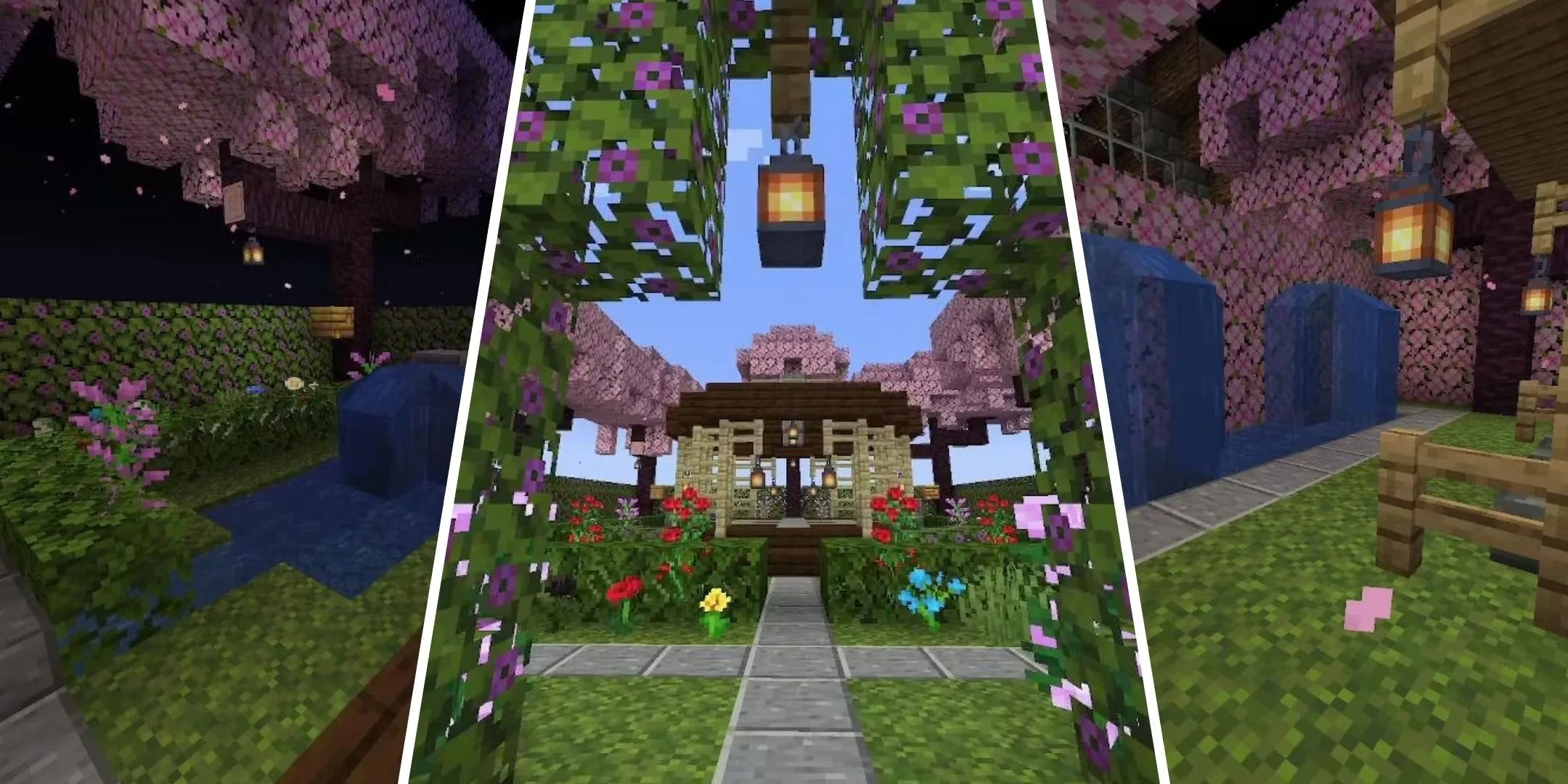
My first and most important rule is simple: build for yourself. Create spaces where you want to spend your digital time. It's tempting to follow trends or replicate builds you've seen online, but true satisfaction comes from crafting an environment that reflects your own taste. Do you love cozy, hidden nooks? Wide-open vistas? Dense, mysterious forests? Let that personal preference guide every decision. This intrinsic motivation is what will keep you engaged long after the last block is placed, ensuring your creation is uniquely yours.
One of the biggest mistakes I used to make was treating the entire surrounding area as one homogeneous blob. Now, I strive to make each corner of the landscape unique. Think of your world as a collection of distinct rooms without roofs. A serene koi pond area here, a bustling apiary there, a quiet reading grove nestled between tall pines. This approach makes the design process infinitely more fun and gives every spot its own personality and story. You can maintain cohesion through a consistent block palette—maybe using a specific wood type and stone variant throughout—but use that palette to create different shapes, layouts, and focal points in each zone.
To achieve this uniqueness, you have to get creative with the blocks themselves. Minecraft is a sandbox, and many blocks have uses far beyond their intended purpose. I love using blocks unconventionally to add surprising detail.
-
Leaves are my go-to for lush, full hedges and bushes.
-
Trapdoors become perfect window ledges, shelves, or decorative trim on garden beds (just remember to crouch when placing items on them!).
-
Walls and fences can be layered to create textured stone facades or intricate latticework.
-
Carpets on top of moss blocks can mimic wildflower patches.
Sometimes an individual element might look odd on its own, but when integrated into a larger scene, it adds that perfect pinch of interesting flavor.
A landscape that only looks good at high noon is missing half the magic. You must design for both day and night. The cycle dramatically changes the ambiance. My builds need to feel inviting under the harsh sun and mysterious or cozy under the moonlight. Lighting is crucial, not just for preventing mob spawns in Survival mode, but as a design element. I often:
-
Hide light sources under leaves or within hollow logs for a soft, natural glow.
-
Use lanterns on chains, which look beautiful even when unlit, adding vertical interest.
-
Experiment with redstone lamps connected to daylight sensors for automatic evening illumination.
-
Place glow lichen or shroomlights in ponds for ethereal underwater lighting.
The third dimension is your best friend. Height variation is the antidote to flat, boring landscapes. Without it, everything feels two-dimensional. I use many techniques to create levels and visual separation:
| Technique | Purpose | Example Blocks |
|---|---|---|
| Terracing | Create flat areas on slopes | Any stone, dirt, wood slabs |
| Retaining Walls | Define spaces and add structure | Cobblestone, bricks, deepslate |
| Tall Hedges/Fences | Section areas and guide movement | Leaves, fences, walls (3+ blocks high) |
| Raised Planters | Add focal points and depth | Any wood, stone bricks |
By sectioning areas with tall elements, you control the player's journey, creating a sense of discovery as they walk a path, turn a corner, and encounter a new, hidden vista.
Color is a powerful tool to guide the eye and set a mood. While I love mixing colors, I do so within a chosen palette to avoid a chaotic mess. For a natural garden, I might stick to greens (leaves, moss), browns (various woods, podzol), and grays (cobblestone, andesite), then use bright flowers or azalea blooms as strategic pops of color. It's vital to use neutral colors for structural elements like paths, benches, and gazebos. You want people to notice the beautiful pond or the custom tree, not be distracted by a neon pink walkway. Striated paths using different stone types (cobblestone, stone bricks, and mossy cobblestone in a pattern) can add visual interest without overpowering.
Almost without fail, adding water transforms a good build into a great one. You don't need an ocean; a little goes a long way. A small, thoughtfully designed pond can become the heart of a garden. I enjoy stocking mine with tropical fish, lining the edges with moss blocks and dripleaves, and maybe adding a small waterfall cascading from a stacked stone wall. A simple bridge across it creates a charming focal point. The blue water provides a perfect cool contrast to all the greens and browns, and the reflective surface adds dynamic light play. In 2026, with all the new aquatic blocks and mobs, the possibilities for creative water features are better than ever.
For a project that combines guidance, secrecy, and fun, I highly recommend building a hedge maze. It's surprisingly inexpensive (mostly just shears and saplings) and serves as a dynamic gateway to another part of your estate. It can hide a secret entrance to your underground base or simply be a delightful puzzle for visitors. The concept is flexible, too! Don't like hedges? Build a maze out of quartz for a marble labyrinth, or use packed mud and hay bales for a rustic corn maze theme. You can even use the green blocks to create topiary art—a giant creeper face visible from the nearby hills would certainly surprise any passing players (or aliens!).
Finally, no vibrant landscape is complete without bees. 🐝 These buzzing friends add an unparalleled layer of life and activity. There's something genuinely peaceful about watching them pollinate your flowers and drift lazily back to their hives. They're not just ambiance; they're functional. If you need honey for potions, honey blocks for redstone, or just a steady supply of honeycomb for your beehive builds, an integrated apiary is the way to go. I like to create little bee sanctuaries with flower forests of every color, multiple beehives nestled in flowering azalea trees, and a small water source nearby. It's a thriving, productive, and beautiful ecosystem that embodies the spirit of a living world.
Landscaping, in the end, is about storytelling and atmosphere. It's the process of taking the blank canvas Minecraft provides and painting it with your own vision of life, color, and detail. By focusing on personal taste, unique spaces, creative block use, and living elements, you can transform any plot into a world that feels truly lived-in and magical. So grab your shovel, some saplings, and a bucket of water, and start shaping your own little corner of paradise. The difference it makes is everything.
Comments Area