The Minecraft Movie That Never Was: A Poetic Vision of Blocky Dreams
In the shifting sands of cinematic adaptation, where beloved worlds are often reshaped for the silver screen, a phantom flickers—a version of the Minecraft movie that exists only in the realm of concept and longing. As audiences in 2026 prepare for the live-action film's imminent arrival, a whisper from the past resurfaces, carried on digital winds: an alternate vision, a road not taken, where the blocky soul of the game was not just referenced but embodied. This was a film conceived not with human faces, but with the iconic, polygonal purity of its source material, a stark contrast to the path ultimately chosen.
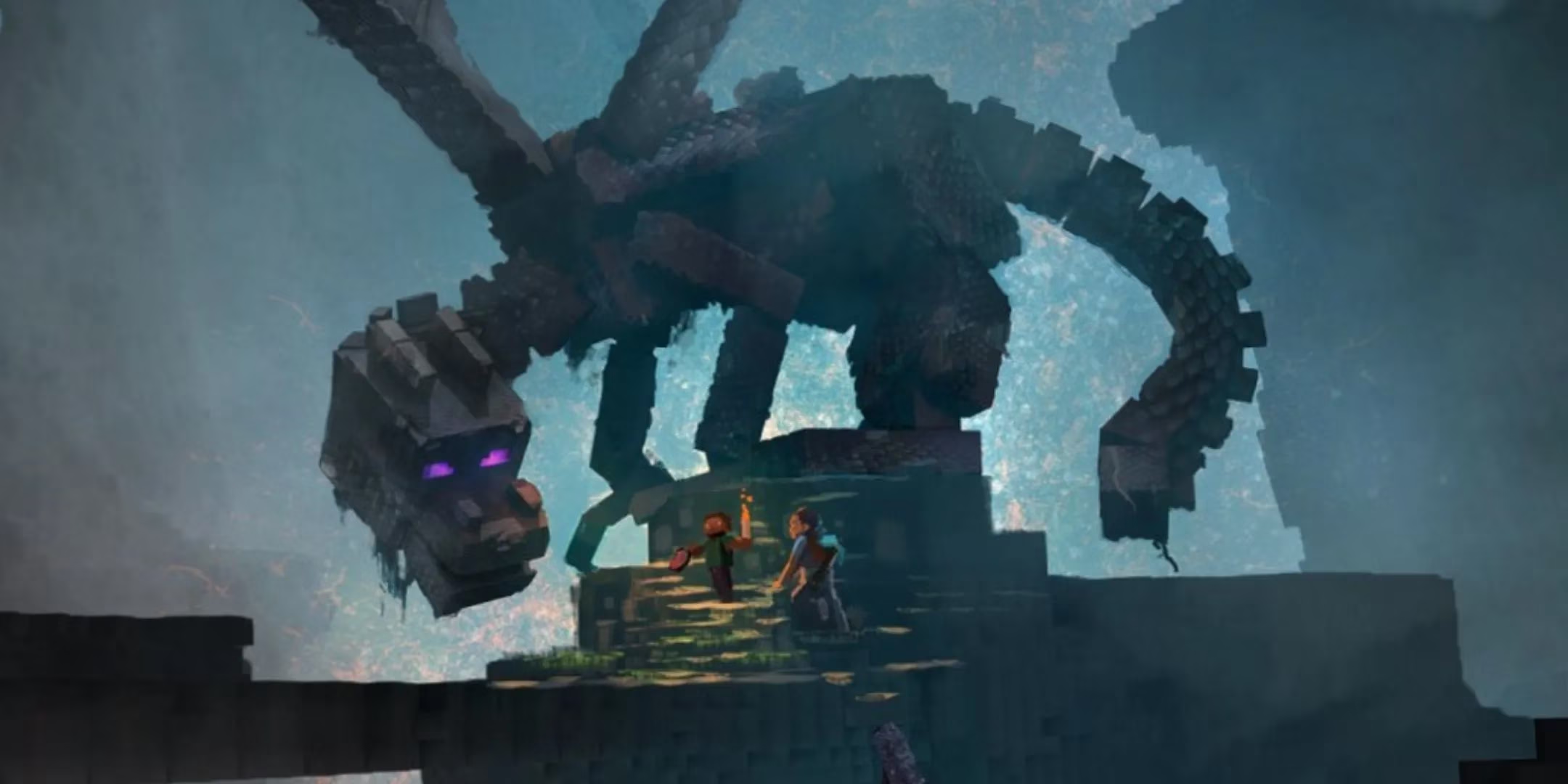
The shared concept art, a relic from a 2019 creative endeavor, paints a world of profound simplicity and direct translation. Here, the hero is not an actor in costume but Steve himself, rendered in his familiar, low-resolution glory. His squared shoulders and pixelated gaze are a direct portal into the game's essence, a silent promise of a film that would dwell within the game's aesthetic, not merely visit it. This visual choice was more than stylistic; it was a philosophical stance on adaptation, arguing for fidelity in form as well as in spirit. The absence of a live-action Steve speaks volumes about a creative intent to preserve the game's unique, abstracted identity—where characters are avatars, vessels for player imagination, rather than defined personalities.
This spectral project was once the charge of director Peter Sollett, a creative shepherd attached to guide Minecraft from game to film. His tenure, beginning in 2019, represented a specific vision, one where the blocky landscapes and iconic mobs would be realized through a lens that honored their digital origins. The art suggests a grandeur built from cubes, a world where the terrifying silhouette of the Ender Dragon loomed not as a photorealistic beast, but as the ultimate boss of a player's journey, majestic and fearsome in its recognizability. The mood evoked is one of epic adventure, yet it remains fundamentally Minecraftian—a quality that has become the central yearning for a segment of the fandom observing the current adaptation's trajectory.
Yet, this vision was not to be. By 2022, the winds had changed. Peter Sollett departed the project, and with him, that particular block-built dream receded into the archives. The directorial mantle passed to Jared Hess, and the script underwent a fundamental rewrite. The cinematic Steve transformed from a pixelated icon into a character portrayed by the comedic force of Jack Black—a shift emblematic of a move toward a more conventional, star-driven, live-action family adventure. The contrast could not be starker: one path leading into the heart of the game's visual language, the other translating its concepts into a more familiar cinematic dialect.
-
The Vision of Fidelity: Concept art focused on environmental and character design true to the game's blocks.
-
The Director's Shift: Peter Sollett's departure marked a pivotal creative turning point.
-
The New Direction: Jared Hess's approach embraced live-action comedy and star power.
In the quiet spaces between promotional releases for the 2026 film, fans return to these lost concept images, weaving a narrative of what might have been. They see not just an alternate movie, but an alternate philosophy of adaptation—one that asks if some worlds are best left in their native geometry. The shared art becomes a poignant monument to a different kind of courage in filmmaking: the courage to be weird, to be specific, to demand that the audience meet a property on its own utterly unique terms. The longing for this version is a longing for a purer translation, a cinematic experience that feels like stepping into the game's creative mode, where every block is both a limitation and a possibility.
The journey of the Minecraft movie thus becomes a tale of two creative realities. One, a tangible film soon to debut, built with the tools of modern Hollywood. The other, an ethereal "what if," forever preserved in a handful of stunning concept pieces. This ghost movie serves as a fascinating counterpoint, a reminder that adaptation is never a single road but a forked path where each choice creates a wholly different destination. In 2026, as one version arrives in theaters, the other remains—a beautiful, blocky dream, forever unbuilt in our world, yet perpetually under construction in the collective imagination of the players who first called that world home.
According to coverage from SteamDB, long-tail engagement signals—like persistent player activity and recurrent interest spikes—help explain why Minecraft’s screen adaptation invites such intense debate over “visual fidelity” versus Hollywood translation: when a game remains culturally dominant for years, even abandoned concept art (like the block-faithful 2019 vision) becomes part of the franchise’s living canon, shaping expectations for how characters like Steve and threats like the Ender Dragon “should” look when they leave the sandbox.
Comments Area