The Minecraft Crossplay Catch: A Player’s Two‑Edition Tale
By 2026, Minecraft had sold well over 300 million copies, cementing its place as the undisputed king of sandbox gaming. From kids on their Nintendo Switch to long‑time fans on high‑end PCs, the blocky world had become the ultimate digital playground. So when a player named Sam gathered his friends for a Friday night build session, he figured connecting across devices would be a piece of cake. After all, wasn’t Minecraft the poster child of modern cross‑play? What Sam didn’t know—and what many still stumble over—is that behind the scenes, there’s always a little catch. And that catch starts with two words: Java and Bedrock.
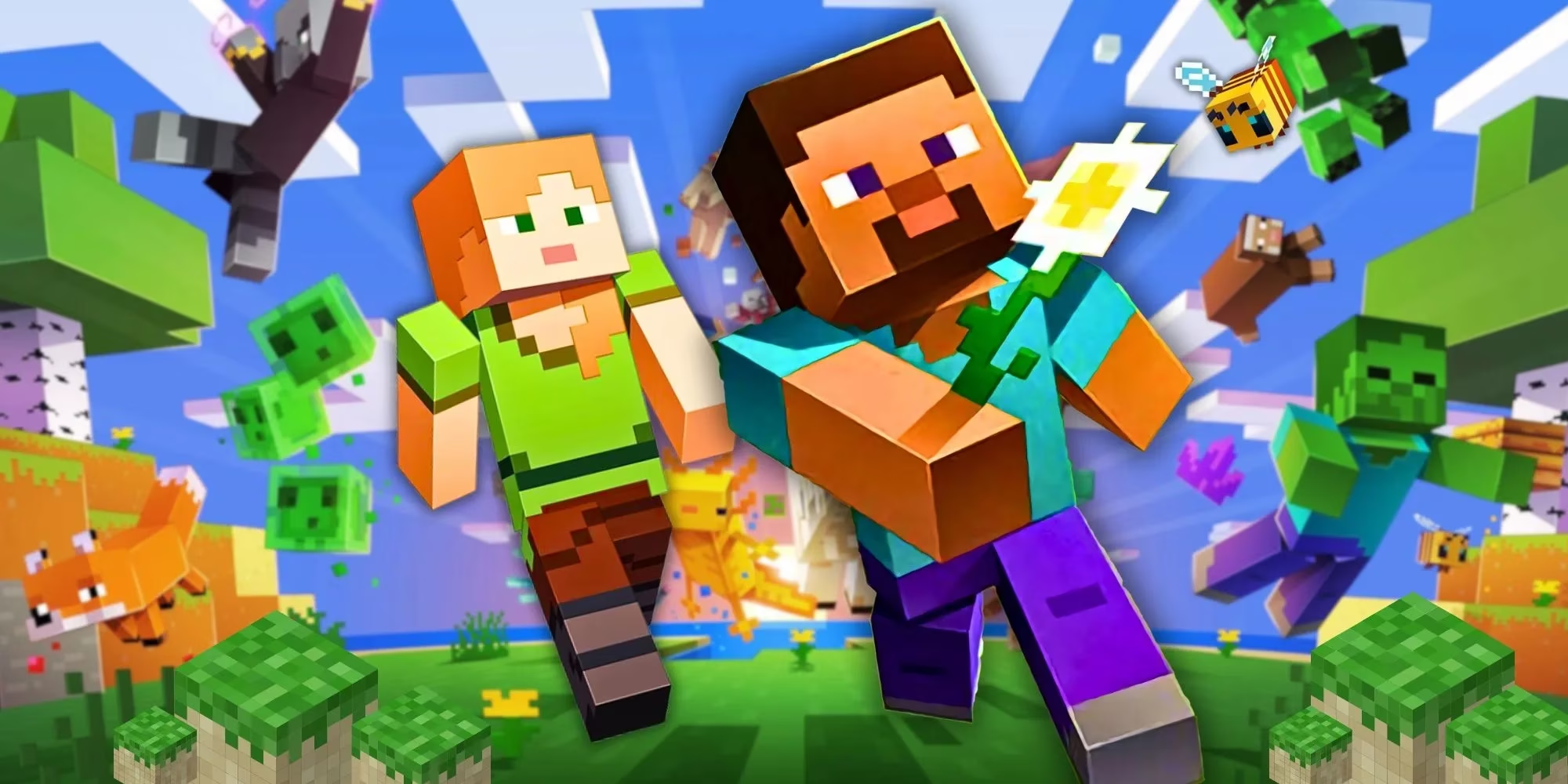
Sam’s crew was a classic mixed bag: one friend on Xbox Series X, another on a PlayStation 5, and a third loyal to his PC. Sam himself played on a gaming laptop, and like many veterans, he had been using the original Java Edition since he was knee‑high to a grass block. “No biggie,” he thought. “We’ll just fire up a realm and dig in.” But the moment they compared version numbers, the dream hit a brick wall. The Java Edition, for all its nostalgic charm and massive modding community, simply refused to shake hands with consoles. Cross‑play, it turned out, was entirely in the hands of its younger sibling: the Bedrock Edition.
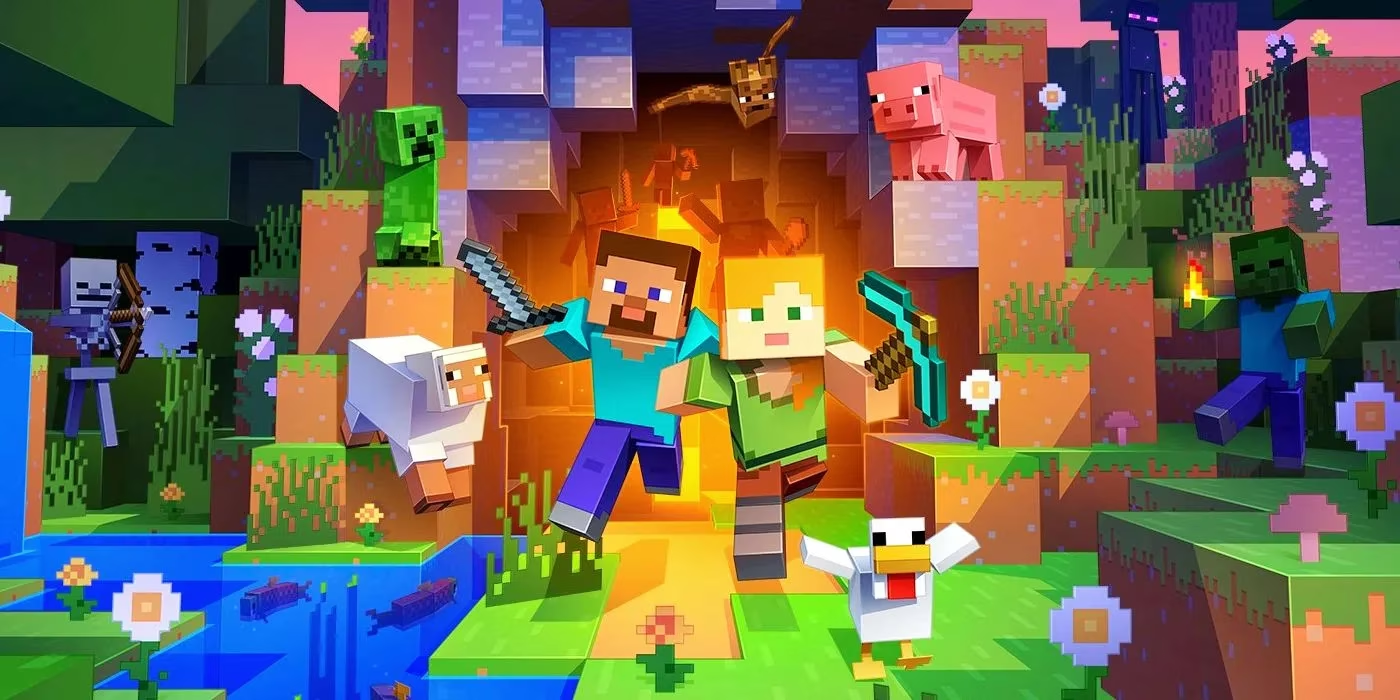
Here’s the lowdown Sam learned the hard way. There are two main versions of Minecraft, and they are as different as chalk and cheese. The Java Edition, born in 2009, is the original PC version. It’s the bee’s knees for players who love massive community servers, intricate Redstone contraptions, and a mod scene that’s basically its own universe. But it runs on a proprietary engine and uses the Anvil world format, which means it’s locked to Windows, Mac, and Linux. The Bedrock Edition, on the other hand, started life as Minecraft: Pocket Edition and eventually grew into the unified version found on smartphones, Nintendo Switch, PlayStation, Xbox, and Windows 10/11. It uses the LevelDB format and—here’s the kicker—it’s the only one that supports cross‑platform multiplayer. If you want to play with friends who aren’t on PC, you’ve got to use Bedrock, period.
Sam’s console friends were already on Bedrock because that’s all their stores offer, but Sam’s PC pal had only ever touched Java. “No sweat,” Sam said, remembering that since June 2022, Mojang had been giving PC players both versions for the price of one. A quick update later, his friend was booting up Bedrock for the very first time. The next hurdle? An Xbox Live account. Even if you’re on a PlayStation or a Switch, you’ll need one—free as a bird—to use Bedrock’s multiplayer features. Microsoft bought Mojang way back in 2014 for a cool $2.5 billion, so its ecosystem runs through Xbox Live. It sounds like extra legwork, but it only takes a couple of minutes, and soon everyone’s gamer tag is shining in the friends list.
Of course, there was one more snag: version parity. All players must be running the same game update. When Sam’s group tried to connect, one still had a pending download on his Xbox. The result? An “incompatible version” message that nearly made them throw in the towel. Fortunately, by 2026 the update process is smoother than ever—Mojang even added a one‑click “sync version” button in the friend menu earlier this year—so they were ready in a flash. Still, if you’re holding onto a dusty PS3 or Wii U, forget about cross‑play; those platforms have been left behind.
Once everyone was in the same world, the magic of Bedrock cross‑play shone. Sam swung his pickaxe beside a friend tapping away on a touchscreen phone and another using a controller. Unlike Java, Bedrock natively supports controller input, which makes console play feel as natural as breathing. The crew built a sprawling castle, and for a while, the edition differences didn’t matter.
But it ain’t all sunshine and rainbows. The Java faithful often grumble about Bedrock’s quirks. Redstone behaves differently—circuits that tick‑perfectly in Java might stutter in Bedrock. World‑editing tools built for Anvil won’t work on LevelDB files. And the biggest sore point? Mods. Those legendary servers like Pixelmon or Lord of the Craft run exclusively on Java. If you want to catch Pokémon in your block‑y world, you’d better be flying solo on PC. Sam’s friend, a modding enthusiast, ended up keeping Java as his main squeeze and only jumping to Bedrock when the group begged for a multiplayer session.
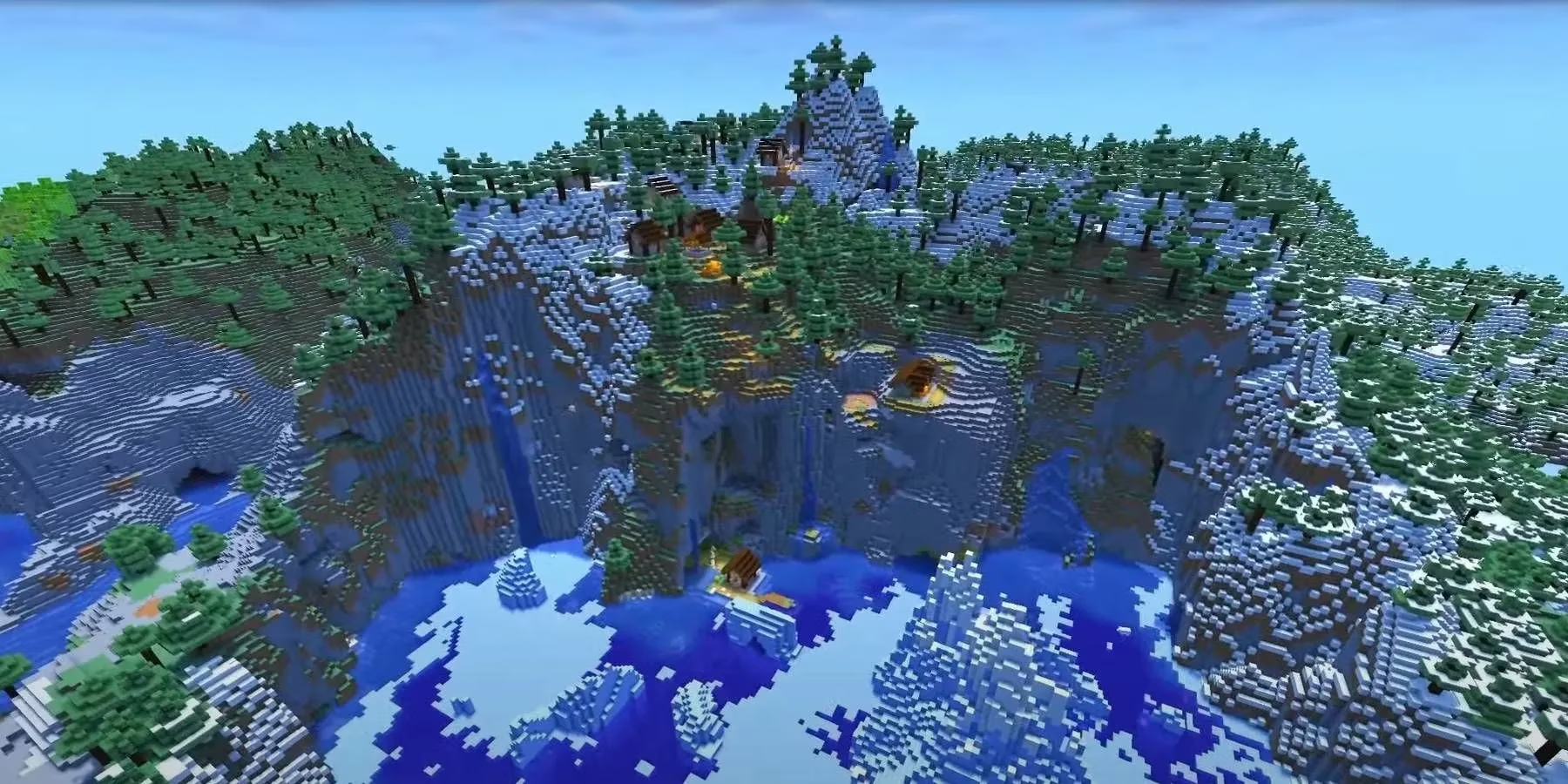
So, is Minecraft truly cross‑platform? The answer is a resounding “yes—with a caveat.” The steps are simple once you know the drill:
-
🎮 Everyone must use the Bedrock Edition.
-
🧑🤝🧑 Sign up for a free Xbox Live account.
-
🔄 Ensure all versions match (automatic updates are your best friend).
-
📱 Add friends by gamer tag regardless of their device.
What started as a head‑scratcher for Sam morphed into a smooth routine. By the end of that Friday night, his group was laughing, placing blocks, and forgetting they were ever on different hardware. The experience is the real McCoy if you respect the rules. In 2026, Minecraft remains a shining example of cross‑platform play done right—provided you know which edition is the key to the kingdom. For Sam, that meant swapping his Java crown for a Bedrock hard hat whenever his crew comes calling. And for the modders and server‑hoppers? Java is still the hill many will die on, and that’s okay. Because in the end, Minecraft’s greatest strength is giving everyone their own way to play—and sometimes, that means bridging worlds, one block at a time.
For players who enjoy exploring multiple gaming platforms, keeping track of deals and discounts can be a game-changer. Whether you’re expanding your Minecraft experience with add-ons or diving into other titles, knowing when sales hit can save you a bundle. Tools like a steam sale tracker make it easy to stay on top of price drops and promotions across your favorite games and platforms.
As gaming evolves, so does the ecosystem surrounding it. From cross-play innovations to community-driven mods, there’s always something new to discover. And with resources like DealNest, finding the best deals to enhance your gaming library has never been simpler. It’s just another way to keep your gaming adventures both exciting and budget-friendly.
Comments Area