The Eternal Pull of Minecraft in a Sea of Gaming Options
In the vast ocean of gaming that 2026 has to offer, where new releases emerge like mushrooms after rain and trends shift faster than desert sands, one title maintains its gravitational pull with the stubborn persistence of a black hole. While the industry dazzles with technological marvels and narrative epics, a significant portion of players find themselves repeatedly drawn back to the familiar, blocky embrace of Minecraft. This phenomenon isn't about a lack of options; it's about the unique comfort and boundless potential that Mojang's creation offers, acting as a digital sanctuary in an increasingly crowded and monetized landscape.
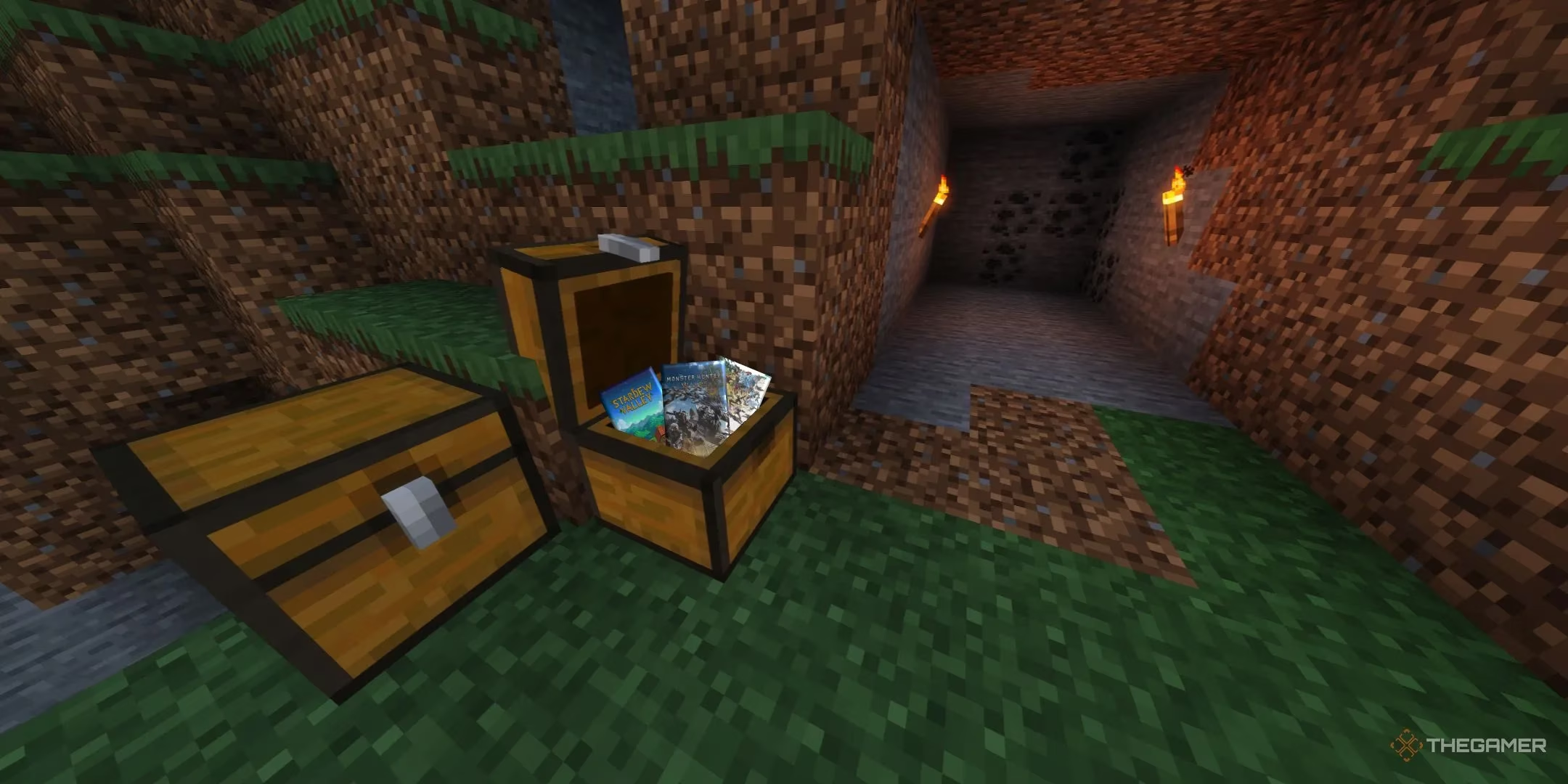
The Siren Song of the Seasonal Blockbuster 🎮
Each season brings a new contender for the "hero shooter of the year," a title promising cinematic polish and the latest cultural zeitgeist, wrapped in a package of aggressive monetization. These games are like elaborate, multi-course meals at a trendy restaurant—impressive to look at, designed for social sharing, but often leaving you hungry for something more substantial an hour later. They come with battle passes that feel like second jobs and loot boxes that operate with the tantalizing cruelty of a slot machine. Yet, their communities can be as fleeting as summer storms. Why commit hundreds of hours to a world that might be abandoned by its own developers in a year when there's a new Minecraft biome to explore, a world that grows and evolves without demanding a single extra cent?
The Intellectual Allure of the Indie Darling 🃏
The indie scene is a fertile ground for innovation, particularly with the roguelike deck-builder genre. These games are intricate clockworks of strategy and chance, demanding deep engagement and rewarding clever play. They are the sudoku puzzles of the gaming world—mentally stimulating, deeply satisfying to master, but sometimes, after a long day, the brain craves something less taxing. Facing down a complex boss with a gimmick mechanic can feel like tackling a dense legal document, while the simple joy of discovering an abandoned mineshaft in Minecraft is more akin to finding a forgotten, interesting novel on a shelf. The choice between mastering a new meta and the gentle, self-directed exploration of a blocky cave system often tips toward the latter.
The Gacha Grind vs. Genuine Creation 📱
Mobile gaming giants like Hoyoverse have perfected the art of the free-to-play model, building vast, beautiful worlds populated by charismatic characters locked behind randomized pulls. These games are like endlessly scrolling social media feeds—designed to be perpetually engaging, filled with bright colors and compelling hooks that encourage just one more pull, one more daily login. Their stories might be epic, but they are stories you witness, not ones you author. In Minecraft, the player is the sole author, director, and set designer. The internet is already saturated with anime aesthetics; paying for the chance to see a specific one feels less rewarding than using a simple resource pack to transform your own Steve into any character you can imagine.
The Sandbox Survival Cousins 🏝️
It's undeniable that Minecraft's success spawned an entire genre of open-world survival crafters. Games like Valheim, Enshrouded, and Palworld have each put their own spin on the formula, introducing new art styles, combat systems, or creature-collecting mechanics. They are like different flavors of artisanal ice cream—each excellent in its own right, offering a novel twist on a classic concept. Yet, for many, these experiences highlight why the original remains king. They often feel like visiting a beautifully constructed theme park based on a beloved book; the sights are impressive, but the core, magical experience of writing your own story within that world is sometimes diluted by a more prescribed path or a different set of rules. Why visit the meticulously crafted replica when you still have free access to the original, endlessly mutable canvas?
The Financial Reality vs. The Evergreen Library 💸
The gaming landscape in 2026 is stratified. On one end, the blockbuster Game of the Year contenders command premium prices, often accompanied by costly DLC and season passes. These are the cinematic events, the $70 theater experiences. For many players, especially those with limited entertainment budgets, this creates a painful paradox: the most talked-about, critically acclaimed experiences are financially out of reach. Choosing between a new RPG and a grocery bill isn't much of a choice at all. Minecraft, purchased once a decade ago, sits on the hard drive like a trusted, well-stocked pantry—always available, always nourishing, requiring no further financial investment. It is the gaming equivalent of a favorite, worn-out sweater: not the flashiest item in the closet, but the one reached for most often because of its perfect, reliable comfort.
| Game Type Temptation | Minecraft's Counter-Argument |
|---|---|
| AAA Blockbuster | Already owned; no battle pass; timeless updates. |
| Indie Roguelike | No meta to learn; pure, stress-free exploration. |
| Gacha/Service Game | Your story, your rules; no "pulls" required. |
| Other Survival Crafters | The original blueprint; unparalleled modding community. |
| Cozy Farming Sim | Farm, mine, and build in one cohesive, endless world. |
The Cozy Game Conundrum 🌾
The cozy game revolution, led by titans like Stardew Valley, offers a specific, wonderful kind of escapism: gentle routines, friendly NPCs, and incremental, satisfying progress. However, these games can sometimes hit a narrative wall, their content halting after 40-50 hours, leaving the player's farm perfected and relationships maxed out. They are like reading a delightful but short novella. Minecraft, by contrast, is an infinite bookshelf. You can build the coziest cottage imaginable, cultivate vast automated farms, and befriend a pack of tamed wolves, all within the same world where you might later decide to build a floating castle or raid an ancient city. The scope for "cozy" is self-defined and never truly ends.
The Ultimate Antithesis: Digital Chores 📊
And then there are the things we have to interact with, like tax software or mandatory training programs. These are the dystopian video games nobody asked for, combining resource management with anxiety and opaque rules. Playing them feels like being stuck in a Kafkaesque puzzle game where the solution is always just out of reach and failure has real-world consequences. Escaping into Minecraft afterwards isn't just leisure; it's therapeutic. In this world, resources are earned through tangible effort—mining yields ore, farming yields food—and the only "tax" is the occasional Creeper explosion, a problem solved with a simple sword.
In the end, the eternal return to Minecraft amidst an avalanche of alternatives speaks to a core human desire for a true sandbox—a space of unlimited agency, creativity, and peace. It is less a game and more a digital homeland; a place to return to when the noise of the new, the shiny, and the monetized becomes too loud. While other games are brilliant fireworks—spectacular, colorful, but brief—Minecraft is the steady, welcoming campfire around which players have gathered for over fifteen years, and in 2026, its flames burn as warmly as ever.
Comments Area