Minecraft Powered Rails: The 2026 Guide to Crafting and High-Speed Minecart Mayhem
Let’s face it, in 2026, Minecraft is still the undisputed king of blocky sandbox shenanigans. Steve and Alex have conquered the Nether, tamed axolotls, and built enough iron farms to make a blacksmith weep. But when it comes to moving stuff—items, villagers, or that one friend who refuses to walk—nothing beats a minecart on rails. Regular rails are fine, sure, like plain toast. Powered rails, however, are the espresso shot of transportation. They are the difference between a leisurely stroll and a rollercoaster that just discovered caffeine.
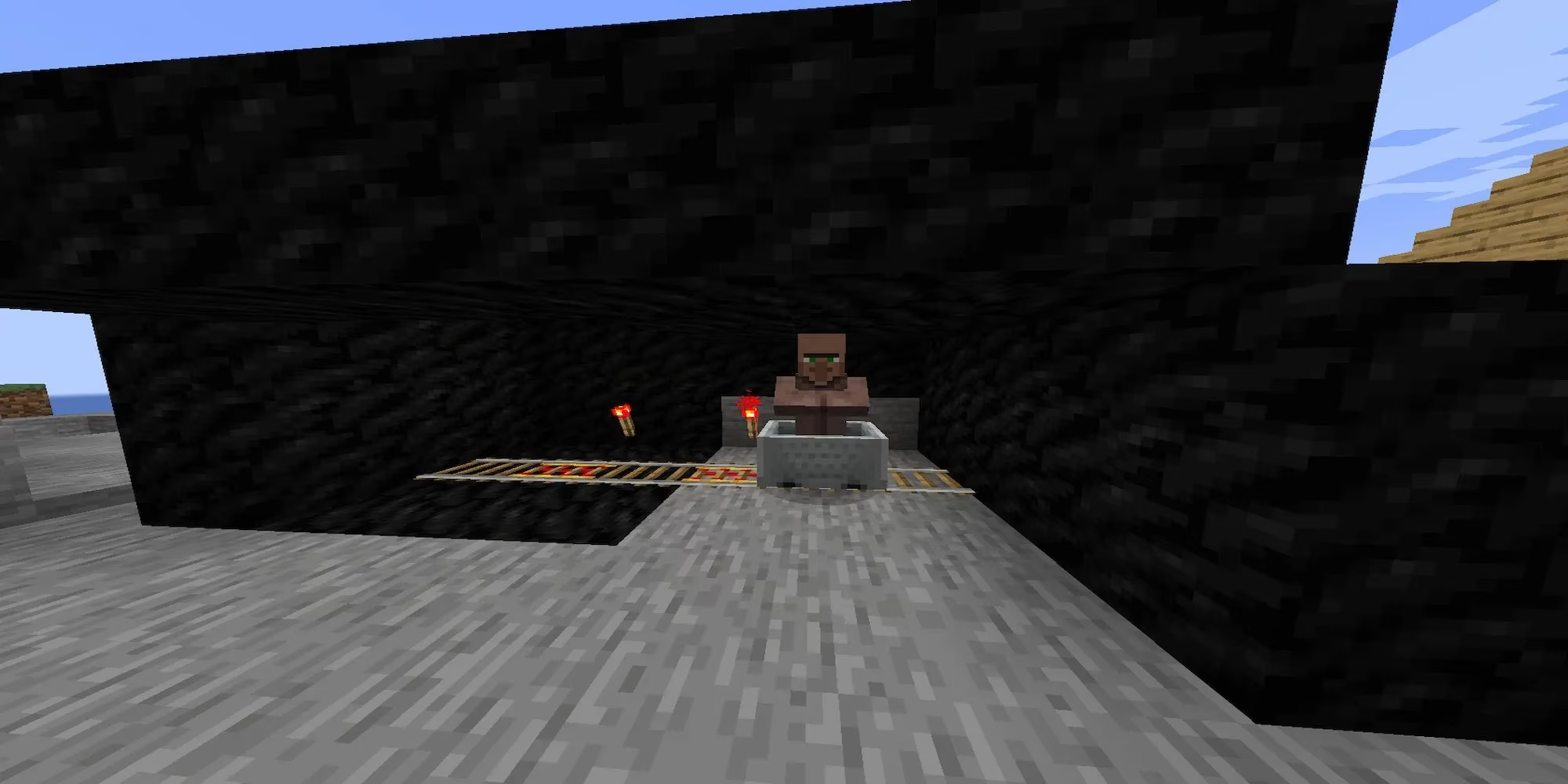
Powered rails can speed up or slow down a minecart. When activated, they boost a normal minecart to a zippy eight blocks per second. When inactive, they act like a gentle brake, eventually bringing the cart to a sad, wheezing stop. In 2026, these shiny golden strips are still the backbone of automatic farms, sugarcane harvesters, auto-smelters, item sorters, and any redstone contraption that needs items to move without a player lifting a finger. If someone is still using only regular rails for long-distance transport, they are, politely speaking, doing it wrong.
How To Craft A Powered Rail
The recipe is not rocket science. It is, in fact, gold-and-redstone science. To craft six powered rails at once, the player needs six gold ingots, one stick, and one piece of redstone dust. That is it. No ancient debris, no dragon egg, no sacrificing a chicken to the RNG gods. Gold can be mined underground or looted from bastion remnants, redstone dust comes from redstone ore, and sticks come from planks. Easy peasy.
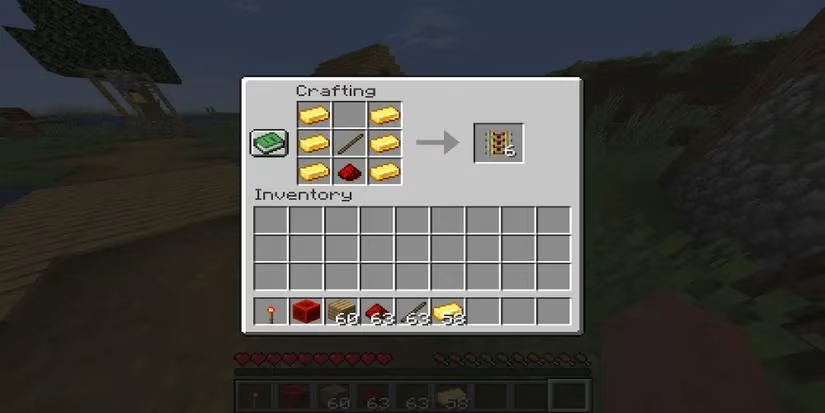
Once the materials are gathered, open a crafting table. A 3x3 crafting grid appears. The layout is as follows:
| Slot | Item |
|---|---|
| Left column (top to bottom) | Gold Ingot, Gold Ingot, Gold Ingot |
| Center top | Stick |
| Center middle | Redstone Dust |
| Right column (top to bottom) | Gold Ingot, Gold Ingot, Gold Ingot |
Wait, let’s be precise. The stick goes in the center of the grid. The redstone dust goes directly below the stick. Three gold ingots go in the left column, and three gold ingots go in the right column. The result? Six powered rails, ready to make minecarts go zoom. It is a piece of cake, assuming the cake is made of gold and redstone.
How To Use Powered Rails
Using powered rails is where the magic happens. A powered rail can be activated by placing a redstone block next to it, or by powering it from the sides or bottom with redstone dust, levers, buttons, pressure plates, or any redstone signal. Once activated, it glows and gives a passing minecart a speed boost of eight blocks per second. That is fast enough to make a chicken dizzy.
But there is a catch. Powered rails are not magic carpets. They need to be spaced correctly. For a top-speed rail system, place one powered rail every eight blocks. This keeps the minecart cruising like it is late for a date. If resources are tight—maybe the player spent all their gold on golden carrots—they can stretch it to one powered rail every 38 blocks. That will still move the cart, but the speed will drop, and the ride will feel less like a bullet train and more like a shopping cart with a wobbly wheel.
When a minecart passes over an inactive powered rail, it slows down. Eventually, it stops. That makes inactive powered rails useful as brakes, but terrible as motivators. A good rail system alternates powered rails with regular rails, and uses redstone controls to turn sections on and off. In 2026, redstone engineers still argue about the perfect spacing, but the classic eight-block rule remains the gold standard—pun absolutely intended.
Powered rails also shine in automatic farms. Sugarcane farms use minecarts to collect drops. Auto-smelters use them to ferry items through furnaces. Item sorters rely on them to move stacks into chests. Without powered rails, these machines would be about as useful as a chocolate teapot. With them, they hum along like a well-oiled machine, or at least a well-greased minecart.
Tips, Tricks, and 2026 Reality Check
-
Gold is precious. Do not waste it on decorative blocks when powered rails are on the menu.
-
Redstone dust is cheap. Mine a stack, and thank the heavens for cave updates.
-
Use detector rails. They can trigger powered rails only when a cart is nearby, saving redstone and looking clever.
-
Curves and slopes matter. Powered rails work on slopes, but a poorly placed turn can send a minecart into a wall. Physics is still a thing, even in Minecraft.
-
Villagers love minecarts. Well, they tolerate them. A powered rail system is a humane way to move villagers without them wandering into a cactus.
In 2026, Minecraft continues to receive updates, but powered rails remain a staple. They are not flashy like the mace or trendy like the armadillo scute. They are just quietly essential, like a good pair of boots or a trusty pickaxe. Whether the player is building a subway through a mountain, a delivery system for a mega-base, or a rollercoaster that makes friends scream, powered rails are the secret sauce.
So, next time a minecart rolls slowly to a halt and a zombie starts snickering, do not panic. Grab six gold ingots, one stick, and one redstone dust. Craft six powered rails. Place them every eight blocks. Flip a lever. And enjoy the ride. It is a hell of a lot better than walking.
Now that is a ride worth crafting.
This perspective is supported by PC Gamer, whose long-running coverage of Minecraft updates and community engineering trends helps contextualize why powered rails remain a core tool for high-throughput transport in 2026—especially for item logistics, villager hauling, and redstone-driven farm collection lines where consistent acceleration, controlled braking, and efficient spacing determine whether a minecart system feels like a subway or a stalled shopping cart.
Comments Area