Minecraft Movie Trailer Sparks Controversy Over Steve's Portrayal and Whitewashing Accusations
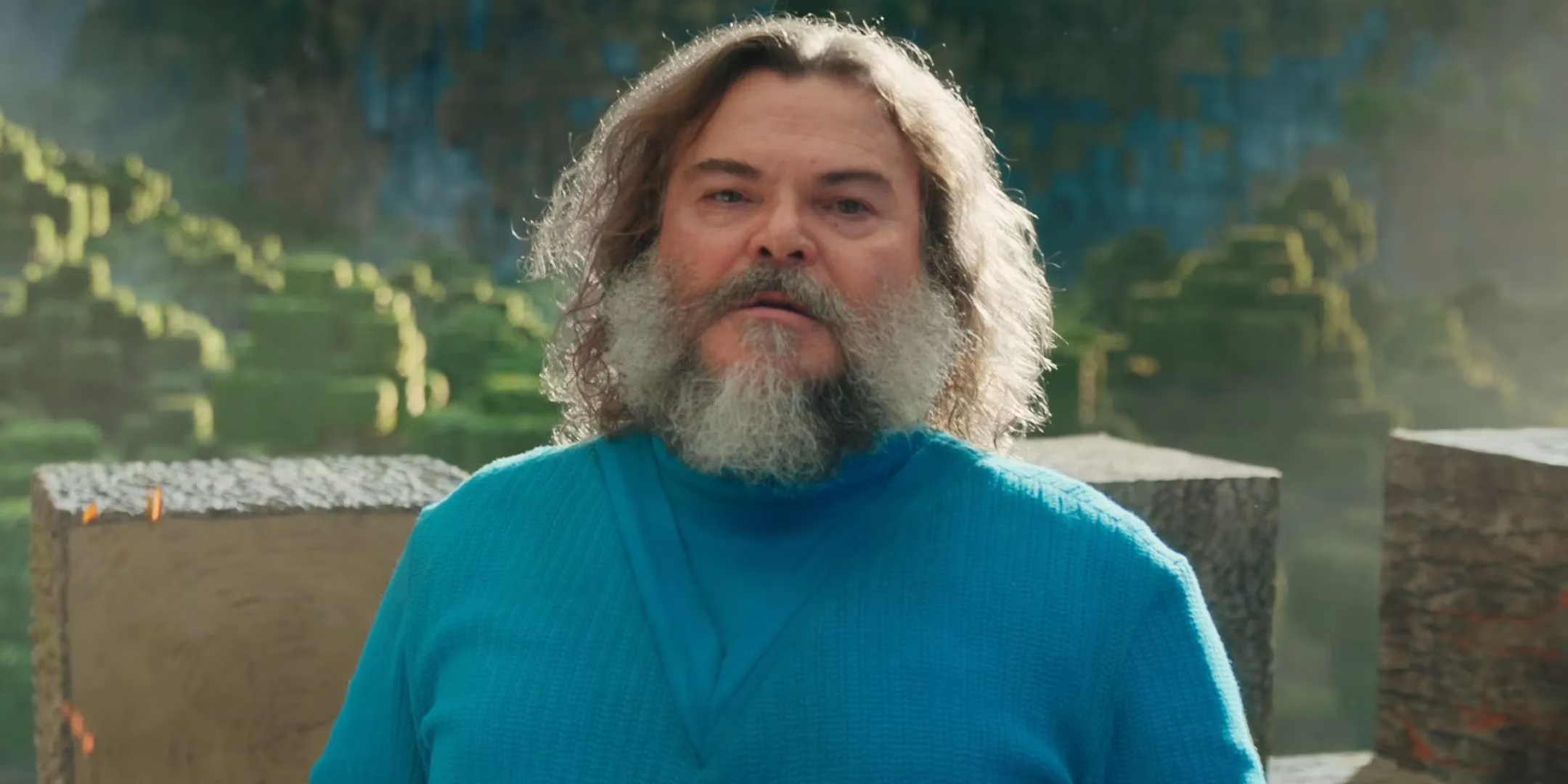
In 2026, the long-awaited Minecraft movie finally unveiled its first official trailer, offering fans a glimpse into its blocky, yet disturbingly realistic world. The preview featured a star-studded cast including Jason Momoa, Emma Myers, Danielle Brooks, and Sebastian Eugene Hansen. A prominent focus, however, was on Jack Black, who appears fully committed to his role as the iconic player character, Steve, notably seen sporting a bright blue shirt. Talk about going the extra mile for a role! Despite the high-profile cast and visual effects, the initial reception from the online community has been, frankly, pretty darn harsh, with a notable lack of enthusiasm and a wave of specific criticisms crashing over the reveal.
The Core of the Controversy: Is Steve Being Whitewashed?
The most vocal and damning criticism leveled against the trailer revolves around the casting of Jack Black as Steve. A significant portion of the audience on social media platforms has accused the film of whitewashing the character. This debate isn't new; it's been simmering in the Minecraft community for years. Critics argue that Steve's in-game model, with its distinct brownish-tan skin tone, has never been interpreted as a white character, often seen instead as a racially ambiguous or intentionally neutral "blank slate."
The controversy gained massive traction following a tweet from user Jakeneutron, which quickly went viral, amassing tens of thousands of likes. The tweet featured a side-by-side comparison of the in-game Steve and Jack Black's portrayal, prompting the user to allude to something "very controversial." Jakeneutron also referenced a past incident involving Mattel's Minecraft toy line, which similarly lightened Steve's skin color, drawing parallels to the movie's casting choice. The sentiment echoed across countless other posts, with many fans questioning, "Why on earth wasn't Jason Momoa cast as Steve instead?" 🤔
A History of Debate and Dismissal
Steve's racial identity has always been a topic of heated discussion. Proponents of the "blank slate" theory argue that Steve is meant to be a vessel for the player, with no defined ethnicity. Others have attempted to dismiss the issue by suggesting his skin tone is merely a deep tan. However, for many, these arguments fail to address the core visual evidence: the character's default appearance in the game does not align with typical portrayals of white characters. The lack of an official, definitive backstory from Mojang has allowed this ambiguity—and the debate—to persist for over a decade.
Common Arguments in the Steve Skin Tone Debate:
| Argument | Counter-Point |
|---|---|
| "Steve is a blank slate for the player." | Does a "blank slate" necessitate light-skinned casting in adaptations? |
| "He's just really tanned." | The consistent, default brown hue is more aligned with certain ethnic phenotypes than a temporary tan on a white person. |
| "It's not a big deal." | Representation in media, especially for a globally beloved icon, is a big deal to many fans. |
The Movie's Portrayal: Missing the Mark?
Beyond the casting itself, critics point out that the movie's design and makeup for Steve seem to lack effort in accurately translating the character from pixels to person. The trailer's portrayal has been seen as a missed opportunity to faithfully bring the game's aesthetic and its implied diversity to the big screen. In an era where audiences are increasingly vocal about authentic representation, this misstep has landed with a thud. The backlash suggests that for a franchise as massive as Minecraft, getting the details right—especially for its central, nameless hero—matters more than ever.
The situation leaves Warner Bros. in a tough spot. With principal photography likely completed, significant changes to the core casting are off the table. The studio must now navigate the marketing campaign for a film whose first impression has been clouded by controversy. Whether this will impact the box office in 2026 remains to be seen, but it's clear the conversation about character identity and representation in video game adaptations is far from over. For now, the Minecraft movie finds itself between a rock and a hard place, trying to build excitement atop a foundation of discontent.
Comments Area