Minecraft in 2026 Needs Deeper Updates Beyond Trial Chambers
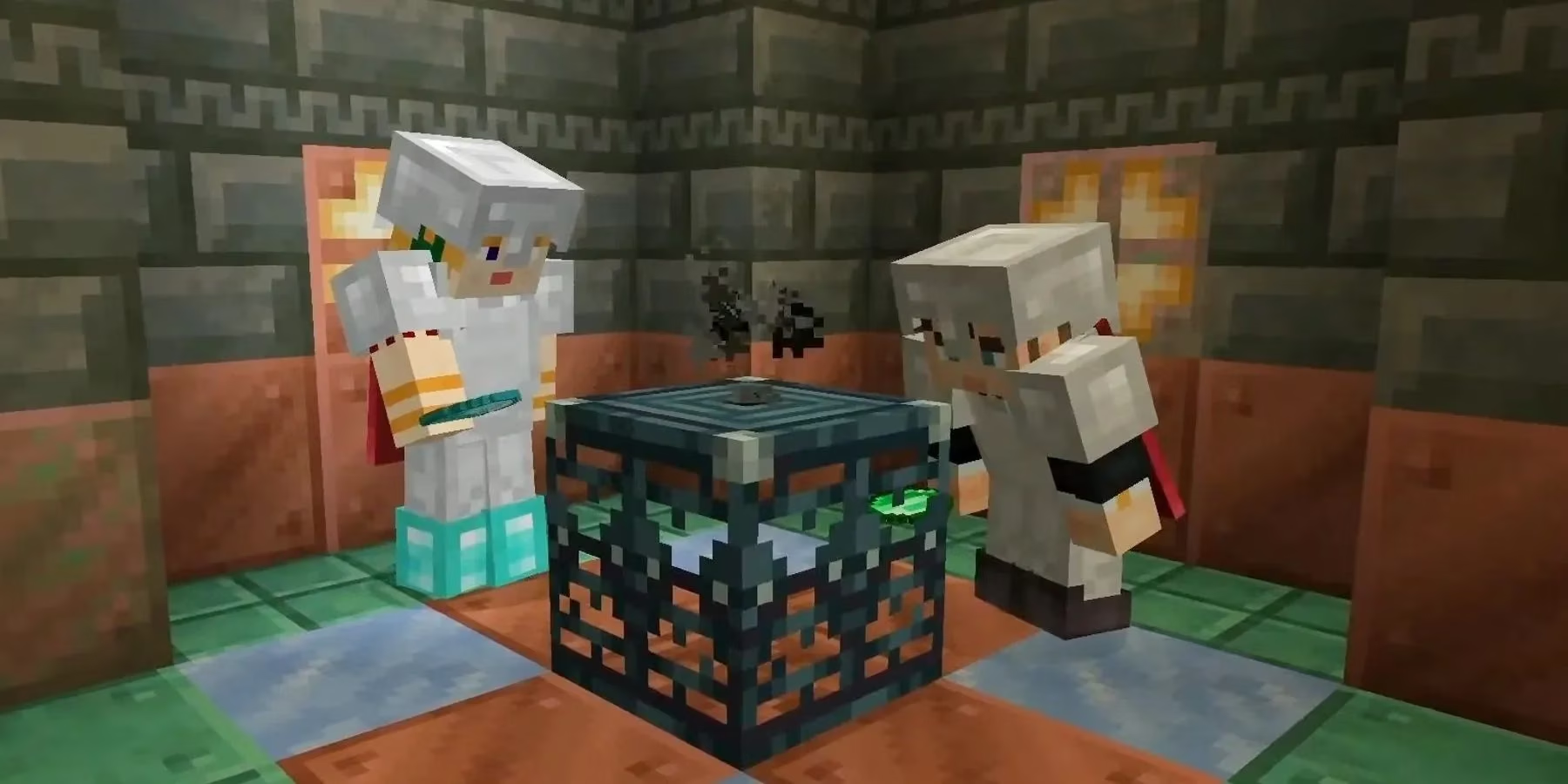
Since the release of Minecraft's 1.21 update, trial chambers and auto-crafters have brought renewed attention to the sandbox giant. The sprawling copper structures and the long-requested automation block addressed some community demands. Yet the fundamental concerns about Minecraft's direction have not disappeared. In 2026, as the game continues to hold its throne in the sandbox genre, many players and critics argue that recent updates still favor breadth over depth. New features arrive, generate excitement, and then fade without meaningful integration into the game's existing systems.
Looking at the history, the Nether Update and Village and Pillage are often remembered as high points because they transformed familiar systems. They made combat, exploration, and trading feel richer. In contrast, later additions such as archeology, beekeeping, and certain mob drops feel isolated. They introduce one-purpose mechanics that rarely connect with redstone, farming, or combat. Mojang has shown some willingness to revisit old content, but the game still needs a more integrated design philosophy.
Several changes would help deepen existing content rather than simply adding more of it.
-
New villager professions would give players an easy way into newer content. A beekeeper villager could trade honey-related goods. An archaeologist villager might sell pottery shards or suspicious sand. A miner villager could offer items from Caves and Cliffs, making that update feel more connected to village life.
-
Updated structures for biome variants would make exploration more rewarding. A witch's hut specific to mangrove swamps or an igloo tailored to massive mountain ranges would add visual and functional variety.
-
Weapons forged from new items would create interesting choices. Arrows tipped with amethyst shards could have unique effects. A sword embedded with sculk sensors might glow when danger approaches, giving players a new reason to explore the deep dark.
These ideas highlight a key principle: if fantastical materials were discovered in the real world, human societies would adapt them for agriculture, military, infrastructure, and medicine. Minecraft's worldbuilding becomes more coherent when new features are woven into old systems.
Rethinking Mobs and Their Roles
Many mobs have entered the game with underwhelming drops or shallow mechanics. This is not an entirely new problem, as bats have never been especially useful. However, the trend extends to pandas, polar bears, and glow squids. Mojang has partly moved away from rewarding players for slaughtering passive mobs, but passive interactions could still offer meaningful gains.
| Mob | Current Problem | Possible Deepening |
|---|---|---|
| Panda | Mostly decorative with limited utility | New bamboo-based items or a zoologist reward for documenting panda behavior |
| Polar Bear | Drops fish rarely, lacks interaction depth | Protecting a bear and its cubs from skeletons could earn temporary trust and rare fish |
| Glow Squid | Ink mainly used for signs and dye | Bottles could collect startled ink for redstone or potions that act like shine potions |
A zoologist villager could reward players for escorting them to mobs across different biomes. This would turn exploration into a more active pursuit. Bottles could be used to collect the ink released by a frightened glow squid, with potential applications in redstone or potions. Protecting a polar bear and its cubs from strays and skeletons could reward the player with the bear's temporary trust and even rare fish. These examples show how mobs can become more engaging without relying on simple drops.
The Long-Awaited Combat Overhaul
Beyond mob and system integration, Minecraft players have consistently requested a combat update. The current combat system lacks depth for many players, and it differs depending on whether someone plays Java or Bedrock. This split creates confusion and prevents a unified experience. Mojang needs to decide whether to adopt one system, refine the existing Java or Bedrock approach, or design something entirely new. After that decision, the chosen system needs suitable depth with new weapons and unique mechanics.
Combat additions could include more weapon types with distinct attack patterns, shields with special properties, or enchantments that interact with newer materials. The goal should be to make encounters feel tactical and rewarding rather than simply increasing damage numbers. A deeper combat system would also benefit trial chambers, which are built around combat challenges. Without stronger mechanics, those chambers risk becoming repetitive rather than truly challenging.
Conclusion
Minecraft's position at the top of sandbox gaming is secure, but that does not mean the game can ignore its design weaknesses. The 1.21 update brought exciting content, yet the broader pattern of shallow expansion remains a concern in 2026. By deepening existing systems, rethinking mob interactions, and unifying combat, Mojang could transform the game from a collection of features into a more cohesive world. That kind of update would likely be remembered alongside the Nether Update and Village and Pillage as a true turning point.
Comments Area