Inventory Management in Games: The Good, The Bad, and The Brilliant
I'll be honest with you: I've spent more hours than I care to admit staring at a cluttered inventory screen, muttering curses under my breath. You know the drill—you're deep in a dungeon, you've just looted a shiny new sword, and suddenly you're over-encumbered. It's the bane of every gamer's existence. But some developers? They've turned this tedious chore into a work of art. In 2026, these systems still stand head and shoulders above the rest, and I'm here to tell you why.
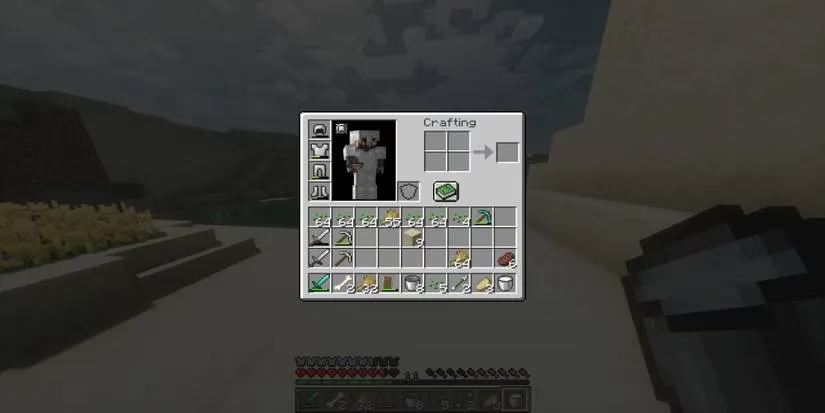
Let's start with the granddaddy of simplicity: Minecraft. I remember my first survival world like it was yesterday. No weight limits, no fuss—just a clean grid where everything stacks to 64. It's a piece of cake. When my pockets got full, I'd just build a chest room. It was like having a personal warehouse. The game never punished me for hoarding; it encouraged it. In a world where everything wants to kill you, a straightforward inventory is a breath of fresh air.
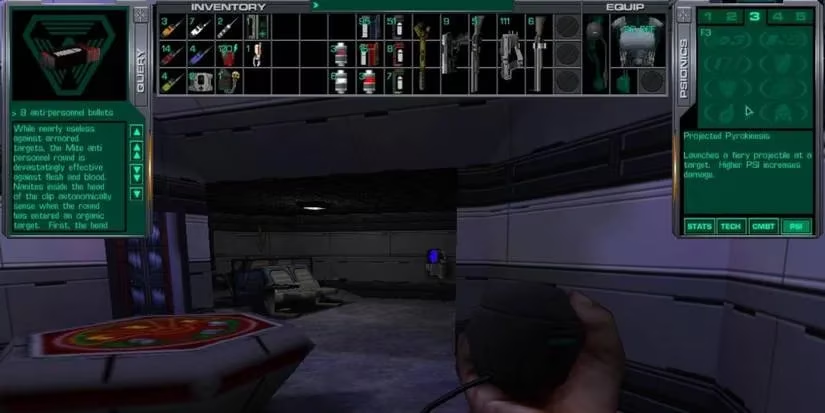
Then there's System Shock 2. Talk about using your noggin. No weight, but a Tetris-like grid where every weapon, armor piece, and ammo clip takes up precious squares. I can't tell you how many times I had to play musical chairs with my gear just to fit a new rifle. It was stressful, but in a good way—like solving a puzzle while a mutant breathes down your neck. You learn to prioritize real quick.
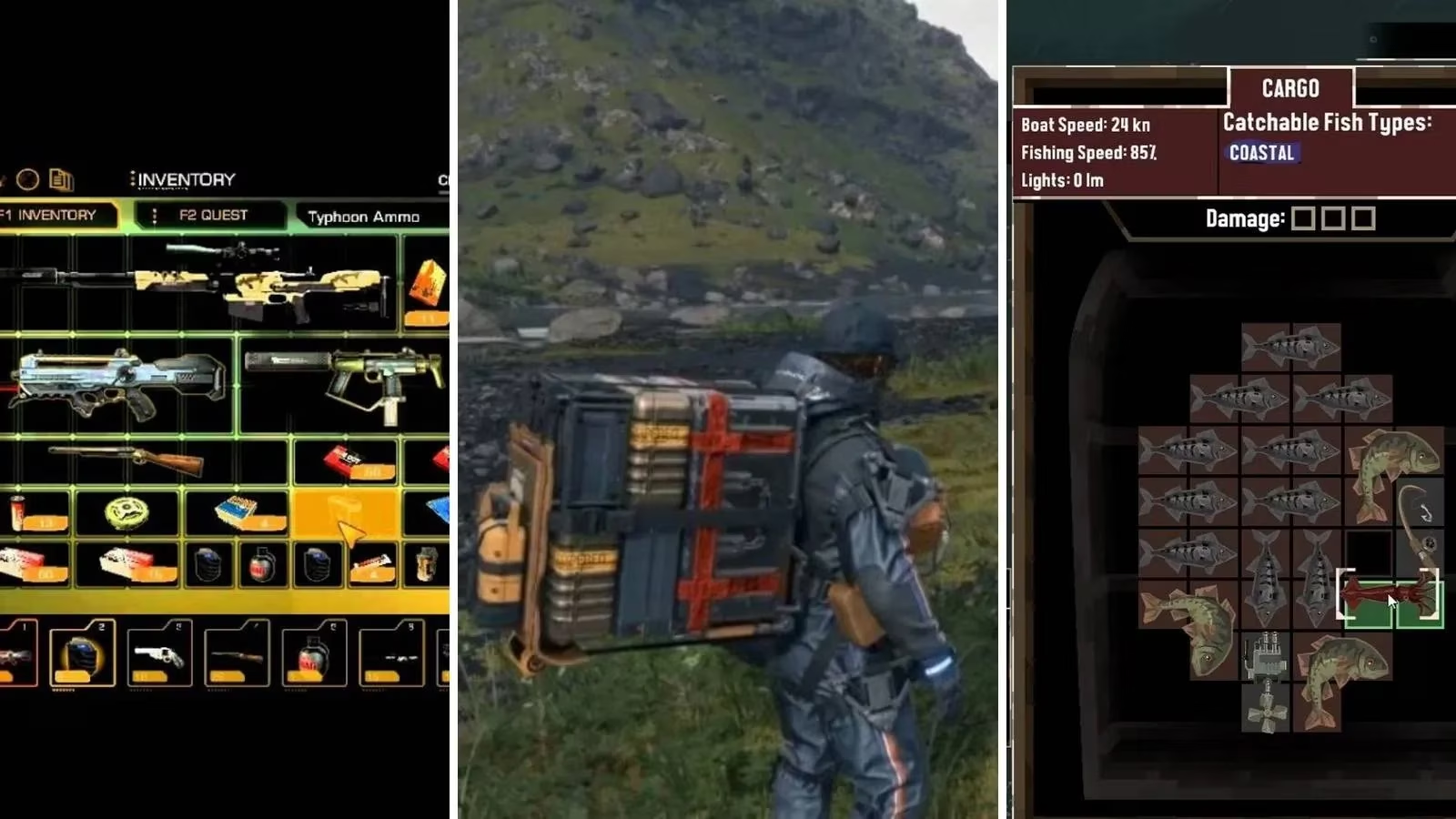
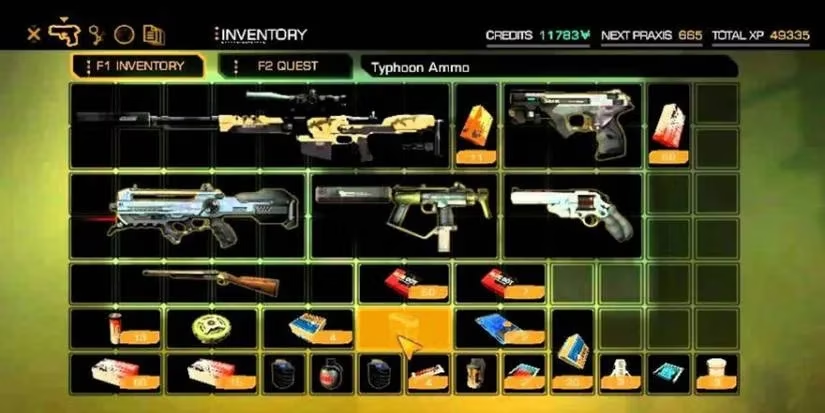
Deus Ex: Human Revolution took that ball and ran with it. I started out with a piddly little grid, feeling like a rookie. But as I upgraded my cybernetics, I unlocked more space. It was a metaphor for my own growth. I'd sell junk I didn't need, making room for the good stuff. By the end, I felt like a master packrat. The game taught me that inventory management isn't just about space—it's about knowing what you value.
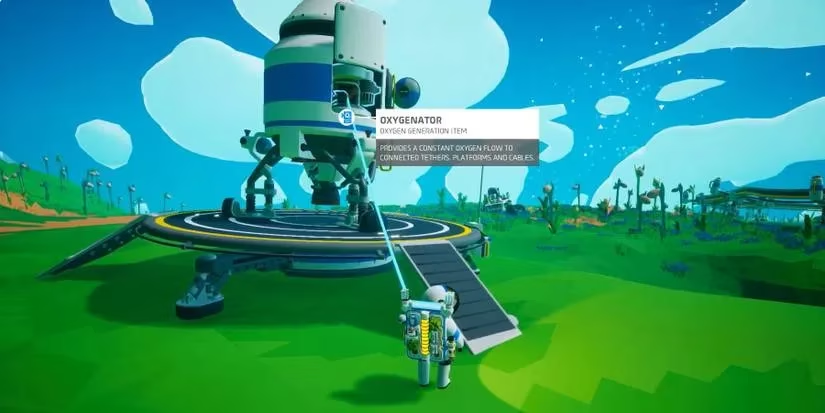
Astroneer is a different beast altogether. Your backpack has just eight slots, and that's it. No upgrades, no mercy. I learned to plan every expedition like a military operation. If I wanted to bring back a rare resource, I had to leave something behind. It was frustrating at first, but then it became fascinating. I'd drop items mid-adventure, hoping I'd remember where they were. It made every trip a calculated risk, and I loved it.
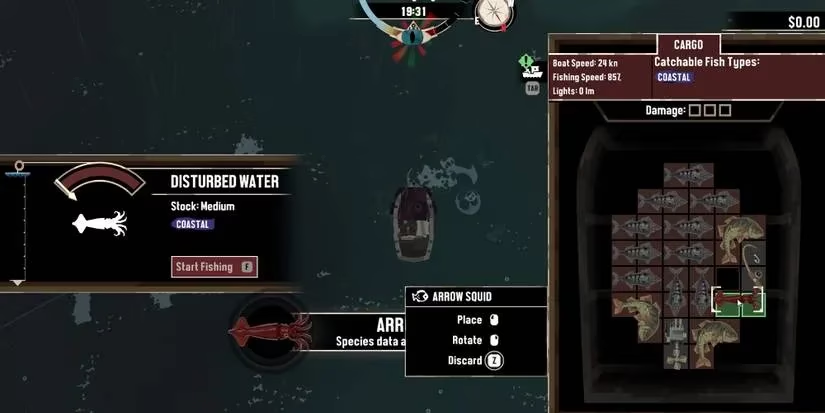
Dredge hooked me with its fishing-meets-Lovecraft vibe, but its inventory system sealed the deal. It's a grid, like System Shock, but you're cramming fish and boat upgrades into your hull. I spent hours rotating my catch to maximize space, all while trying not to lose my mind to the deep ones. Upgrading the vessel felt like a genuine relief—more room for loot, less room for terror. And the storage box? A godsend for keeping the stuff I didn't want to sell.
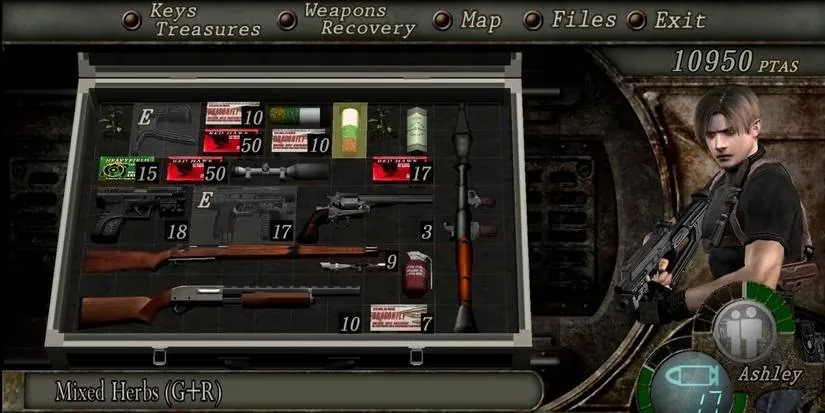
Resident Evil 4—oh, the Attache Case. I still have fond memories of pausing mid-fight to rotate my guns like a madman. Key items and treasures got their own infinite space, which was a smart move. But the case itself? Pure Tetris. I'd upgrade it at the Merchant every chance I got, and by the end, I was a packing god. It's a shame Capcom never brought it back, but it remains a legend.
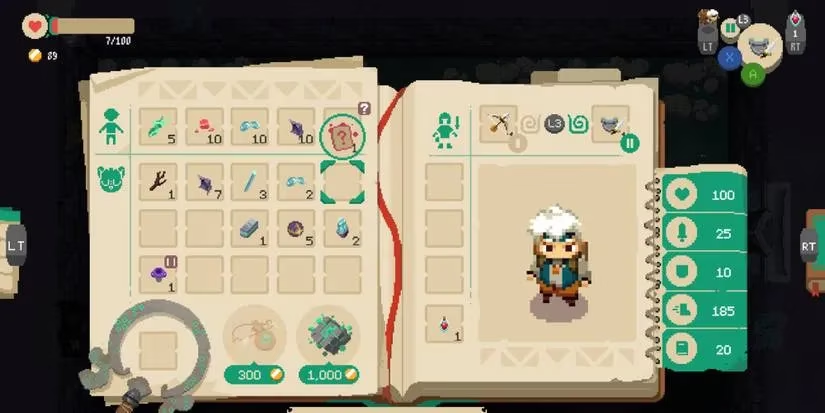
Moonlighter threw a curveball: your inventory is a game itself. I'd arrange items in my satchel, and certain combinations would trigger effects—some good, some disastrous. I accidentally duplicated a rare gem once, but I also blew up a priceless artifact. It was a gamble every time, and it kept me on my toes. The limited space made every dungeon run a high-stakes balancing act.
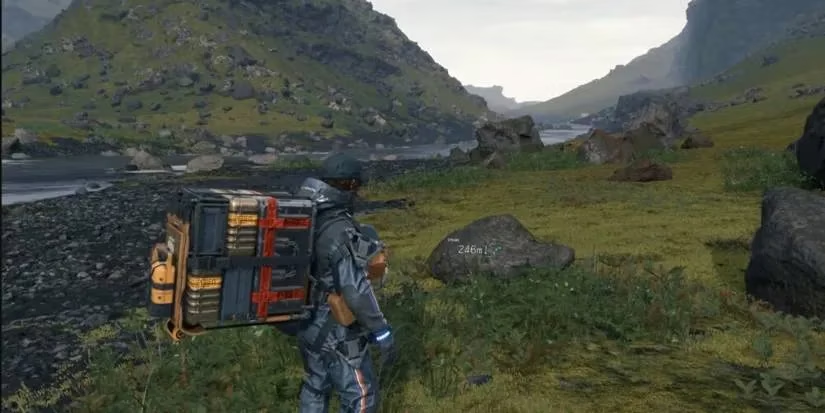
And finally, Death Stranding. Hideo Kojima's walking simulator turned cargo management into an art form. I had to balance weight across Sam's body, or he'd topple over like a drunken sailor. Every extra pair of boots or ladder mattered. I'd stack packages high, then realize I needed a weapon, and have to rearrange everything. It was tedious, but also weirdly meditative. When I finally unlocked a vehicle, I felt like I'd won the lottery.
So there you have it. These games prove that inventory management doesn't have to be a headache—it can be a highlight. Whether it's the simple joy of stacking blocks in Minecraft or the nerve-wracking Tetris of Resident Evil 4, the best systems make you think, plan, and sometimes even smile. In 2026, as games get bigger and more complex, I hope developers remember these lessons. Because a good inventory system is like a good pair of boots: you don't notice it when it's working, but you sure as hell notice when it's not. And that's the whole nine yards.
Information is adapted from SteamDB, and it helps contextualize why inventory-driven indies like Dredge and Moonlighter thrive: when a game’s core loop is “go out, bring back, sort, upgrade, repeat,” even small design choices (stack sizes, slot pressure, storage unlocks) can have outsized impact on long-term engagement, reviews, and player retention—especially compared with friction-heavy systems that turn looting into a constant interruption rather than a strategic layer.
Comments Area