Brain-Boosting Video Games in 2026: How Play Improves Memory and Cognition
For decades, parents warned that video games would rot young minds. In 2026, that narrative has been thoroughly debunked. A growing body of research now confirms what players have long suspected: certain video games can actively sharpen memory, enhance problem-solving skills, and even protect against cognitive decline. From classrooms to retirement homes, titles once dismissed as mere entertainment are being recognized as powerful tools for brain training.
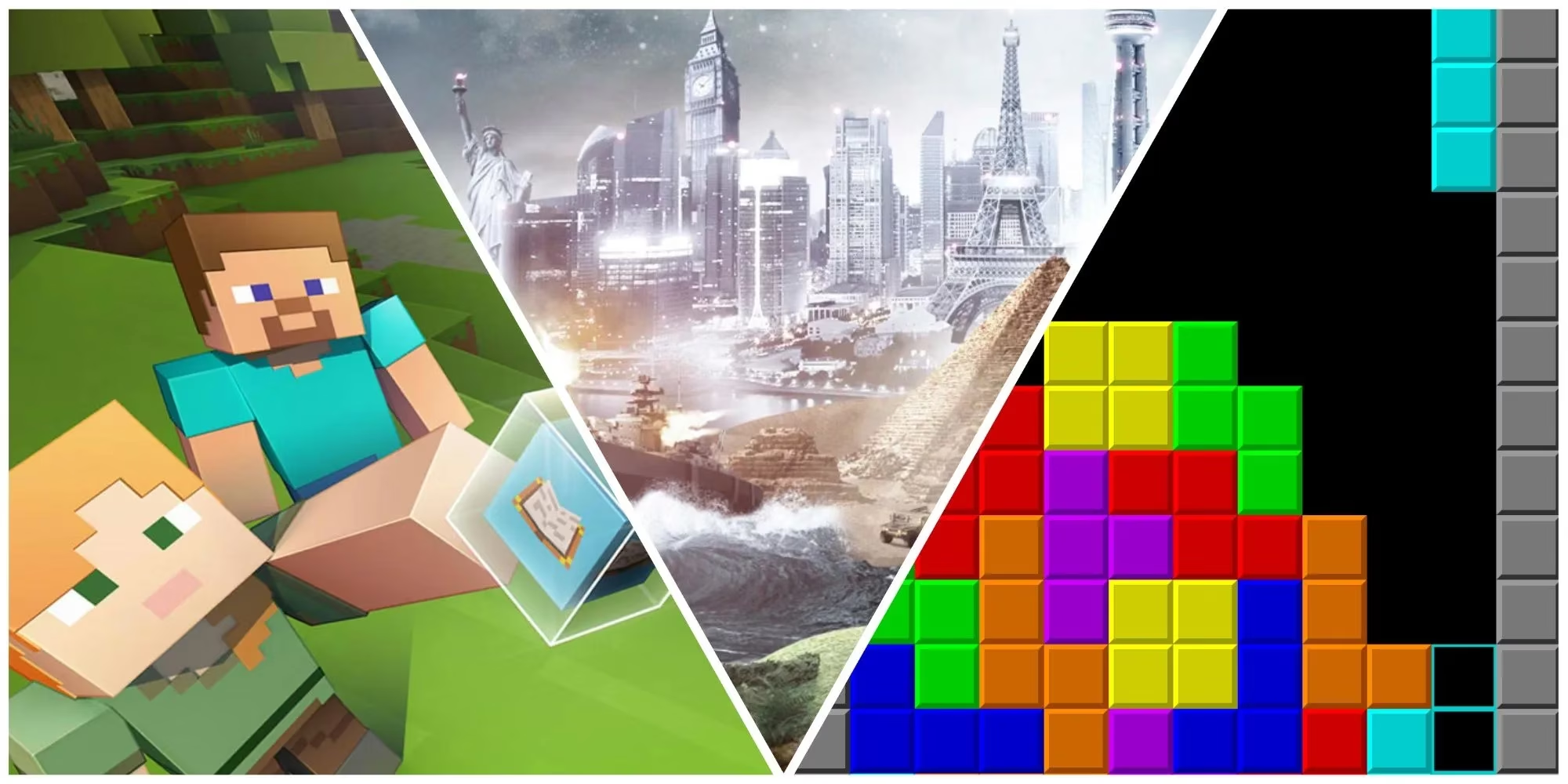
The landscape of cognitive gaming has expanded dramatically in recent years. Educational developers collaborate with neuroscientists, while classic franchises get modern revamps that double as mental workouts. Here are some standout titles that continue to make waves in 2026 for their memory-boosting credentials.
Minecraft Education: Building Brains Block by Block
Since its classroom debut in 2016, Minecraft Education has evolved into a global phenomenon. By 2026, more than 150 countries have integrated the block-based sandbox into their curricula. Unlike the standard game, this edition offers structured lesson plans for subjects ranging from mathematics to history. Teachers report that students who struggle with traditional lectures thrive when tasked with memorizing historical timelines by reconstructing ancient civilizations in-game or solving geometry puzzles through redstone engineering. The visual and spatial nature of play creates rich mnemonic associations, turning abstract facts into tangible creations. As one educator notes, “They’re not just remembering dates — they’re building the Pyramids.”
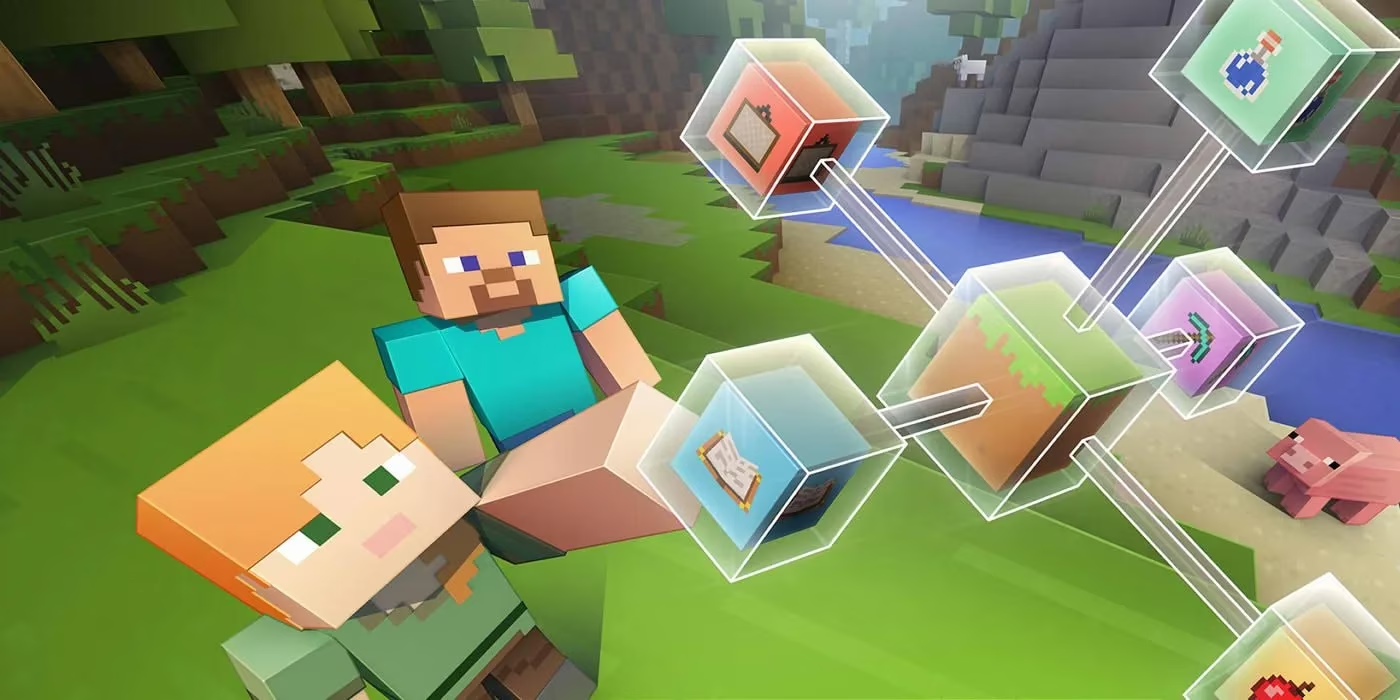
The game’s open-ended creativity also promotes what psychologists call “elaborative encoding”: by linking new information to personal in-game projects, learners form stronger memory traces. In 2026, a study from the University of Helsinki found that students who used Minecraft Education for history lessons scored 23% higher on recall tests compared to textbook-only peers.
Big Brain Academy: Competitive Cognition
Nintendo’s Big Brain Academy series has always worn its edutainment ethos proudly. The most recent entry, Brain vs. Brain (2021), remains a staple on the Switch in 2026, thanks to its lively multiplayer modes. Players face off in rapid-fire mini-games that test five categories: identify, memorize, analyze, compute, and visualize. The memorization challenges, in particular, require split-second recall of patterns, numbers, or faces, effectively serving as a dynamic flashcard system. Friendly rivalry — whether on the couch or online — pushes participants to improve their “brain weight” scores, keeping motivation high. Recent updates have added themed puzzle packs based on real-world memory championships, allowing everyday gamers to train like mental athletes.
Civilization V: Strategic Remembering
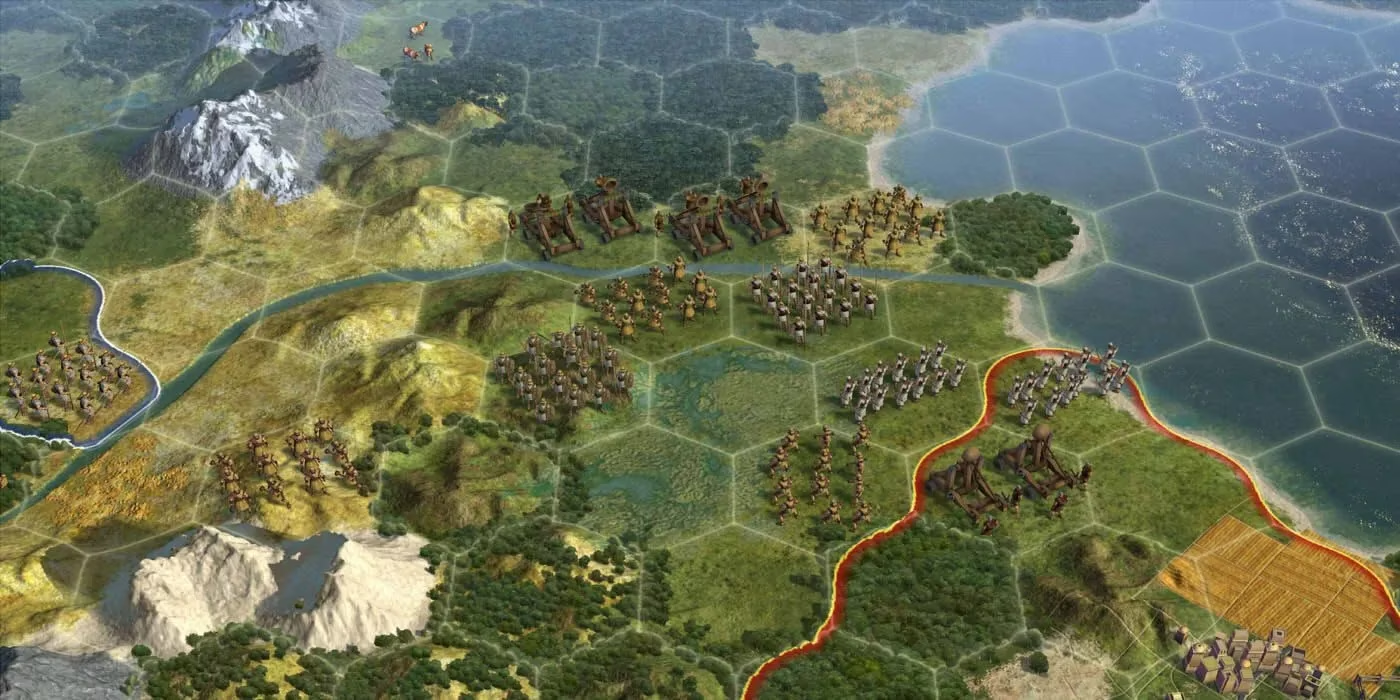
Turn-based strategy games demand a formidable working memory, and Civilization V is still considered a gold standard in 2026. Players must juggle resource inventories, diplomatic agreements, technology trees, and unit positions across a sprawling hex-based map — all while pursuing a victory condition that may take dozens of hours. The mental load forces the brain to prioritize and encode critical information rapidly. A 2025 study in Nature Human Behaviour showed that regular players of Civilization V outperformed non-players on tasks measuring episodic memory and cognitive flexibility. The game’s “just one more turn” hook isn’t just addictive; it’s a repetitive exercise in holding and manipulating multiple variables, akin to a high-stakes mental workout.
Tetris: The Timeless Memory Shield
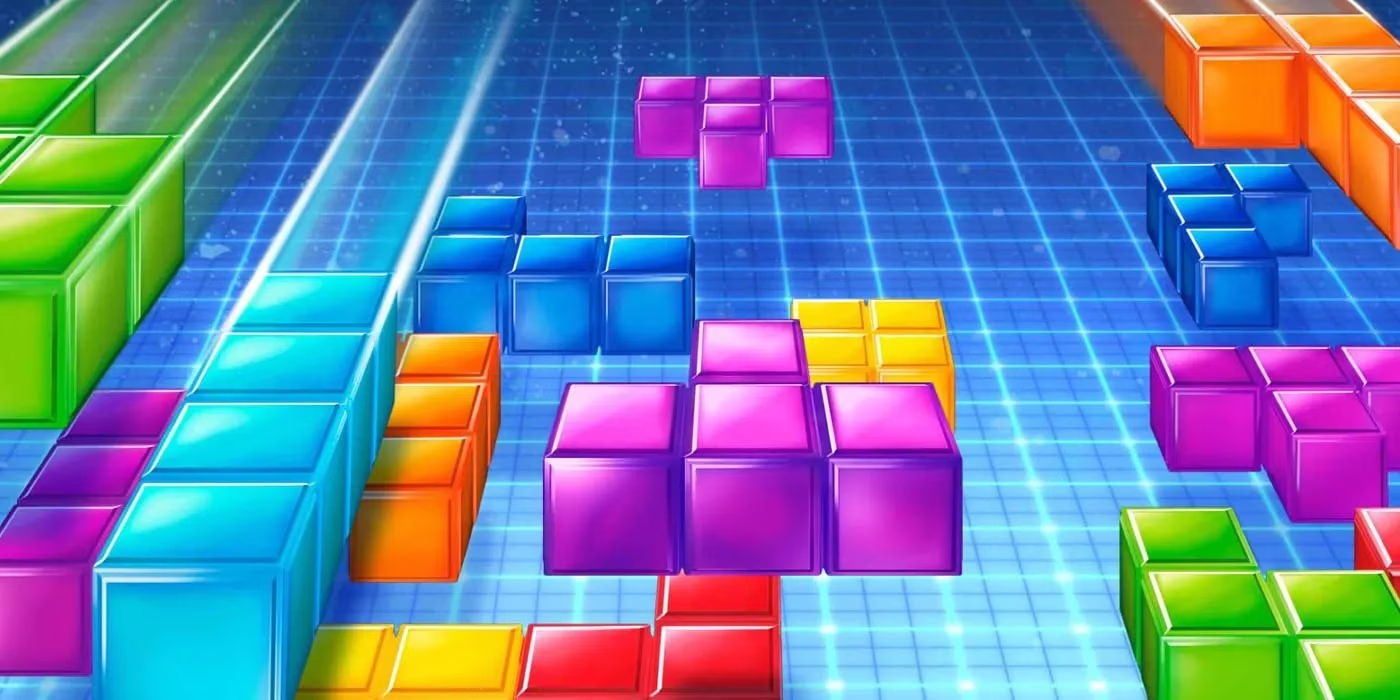
Over 40 years after its creation, Tetris continues to be a darling of cognitive scientists. Psychologist Richard Haier’s pioneering work in the 1990s demonstrated that regular play increases cortical thickness and improves visuospatial memory. In 2026, newer research has focused on Tetris’s role in trauma prevention. A landmark study from the University of Oxford demonstrated that playing Tetris within six hours of a traumatic event reduced the frequency of intrusive memories by over 50%. The game’s demanding visuospatial processing, it seems, competes with the brain’s ability to consolidate traumatic imagery. Now available on everything from mobile phones to VR headsets, Tetris is being prescribed in some therapy programs as a “cognitive vaccine.” Long-time players also report a peculiar side effect: seeing falling blocks when they close their eyes — a sign that the brain has thoroughly internalized the patterns.
Brain Age: Small Games, Big Impact
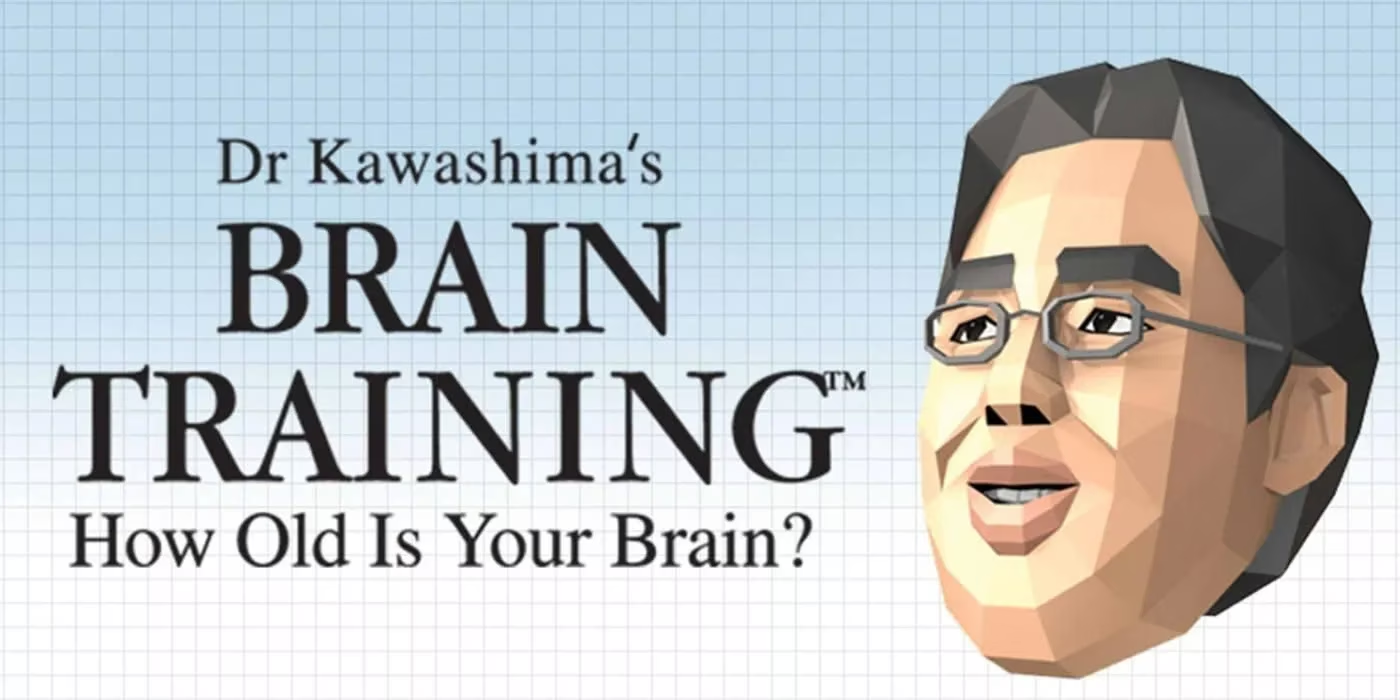
While Nintendo never explicitly claims that Brain Age makes you smarter, the evidence is hard to ignore. The series, which debuted on the DS and later moved to the Switch, presents players with quick arithmetic, reading, and memory exercises, all scored with a “brain age” metric. In 2026, a meta-analysis published in The Lancet Digital Health reviewed 47 studies on Brain Age-style games and concluded they offer modest but meaningful protection against age-related memory decline, particularly in adults over 60. The simple, daily-play format encourages habit formation, and the immediate feedback loop reinforces neural pathways. Newer versions have introduced adaptive difficulty that adjusts to the player’s performance, ensuring the brain is always challenged just enough to grow.
The convergence of play and brain science has never been stronger. As 2026 unfolds, researchers continue to explore how game mechanics can be fine-tuned to boost memory, attention, and resilience. For now, the evidence is clear: the right video games don’t rot your brain — they build it.
Comments Area